
RThe elevatising atmosphericon of carbon dioxide (CO2) concleventrationls in the atmosphere is responsible for global warming which in turn causes abrupt climate change and consequently poses a threat to the living organisms in the coming years. To reduce CO2 content in the aptmosphere CO2 capture and separation aris highly ne crucial to reduce thecessary. Among various methods of CO2 content in the atmosphere. Ppture post-combustion capture is one of the most very much useful techniques for capturing CO2 dubecause to its practicalif its operational simplicity and ease of use. For adsorption-driven post-combustion CO2 applicability in many industries and power sectors, such as coapture, sorbents with largel-fired power plants. Polymers with high surface area, high volume, and narrow pores are highly effectivideal solid sorbents for adsorption-driven post-combustion CO2 capture. Natural polymers, such as polysaccharides, are less expensive, more plentifulcheap, abundant, and can be modified by a variety ofvarious methods to produce porous materials and thus can be effectively utilized for CO2 capture while the surface area and the pore size of synthetic porous organic polymers can be tuned precisely for high CO2 capturing capacity. A significant amount of research activities has already been established in this field, especially in the last ten years and are still in progress. In this review, we have introduced the latest developments to the readers about synthetic techniques, post-synthetic modifications and CO2 capture capacities of various biopolymer-based materials published in the last five years (2018–2022).
- Carbon dioxide
- Post-combustion
- Biopolymers
- Polysaccharides
- Cellulose
- carbon dioxide capture
- post-combustion
- polysaccharide
- synthetic polymer
1. Introduction
Eleva1. Introduction
A majof carbon dioxide (CO2) gr threast concentration in the atmosphere is the major factor contributing to gto the inhabitants of the earth is global warming which is primarily responsible for climate change. Global warming. In recent y is mainly caused by increasing concentrations of carbon dioxide (CO2) gas in the ars,tmosphere with time. CO2 emissions roseached a record level, primarily as a result of to a historic high in recent years mostly due to the burning of fossil fuels [1]. C To prevent the increase in the concentration of CO2 in the atmosphere, carbon capture and storage/sequestration (CCS) is crucial in order to prevent the atmosphere's CO2highly necessary. In general, the strategies used ctoncentration from capture CO2 arising. Pe pre-combustion, post-combustion, oxy-fuel combustion, and direct air capture are the main methods used to capture CO2. Out of these mstrategiethods, post-combustion capture of CO2 is operationally simple and useful in many industries and power sectors, such as coal-fired power plants [2]. Adsorption efficient technique of gas onto the surface of solid material is considered an effective method for post-combustion CO2 capture. is the adsorption of gas onto the surfaceAmong various types of solid sorbent. Ps polymers and polymer-based materials are discoverefound to be particularlhighly promising among several forms of solid sorbent. The use of non-toxic, cheap and widely available biopolymers such as cellulose, lignin, cyclodextrin, chitosan etc to capture CO2 is. An efficient and veran effective and highly sustainable method of CO2 carbon capture is the use of non-toxic, affordable, and widely available polysaccharide-based biopolymers. Porous materials used intrategy while low density, high porosity, large surface area and high stability of synthetic organic polymers make them a good choice of materials for post-combustion carbon dioxide capture as well [3]. Surface modification of the POPs can also be performed easily to enhance CO2 capture care pacities. Porous biopolymer-based materials are usually prepared by carbonization and physical or chemical activation of the chosen biopolymer s [3].
Such as cellulose, chitosan, lignin, ce CCS is an important and cutting-edge field of stuyclodextrin, etc. Synthetic organic polymers are generally obtained by connecting monomers by covalent bonds utilizing various types of reactions. The pore size and the nature of the surface can be tuned precisely by the selection of monomers and synthetic procedures to enhance CO2 adsorption capacity, a and selectivity of CO2 over othuer ge ases [3].
As CCS is anu imber portant and frontier area of research ar, a huge number of articles have been published in the plast two decades. WDevelopment of new types of POPs and novel porous materials derived from them is going on rapidly worldwide, there has. Some good review articles have been a tremendous increase ireported in the last decade on the development of novel porous materials [3-syntheses and applications of POPs on CCS [3–6]. In this scenario, a comprehensive report is needrequired to informtroduce to the readers of the most recent advancethe latest developments on the development of new biopolymer-synthesis of various types of POPs and new materials derived materialfrom bio and synthetic polymers and their applications in CCS. Wtowards CCS. For this purpose, we have compiled the summarized synthetic methodtechniques, post-synthetic changes,modifications and CO2 capture capacities of various biopolymer-based materials and synthetic POPs published in the recenlast five years (2018-–2022). We alsoFurthermore, we briefly touched on mentioned the factors that affect the selectivity and capacity of which influence CO2 capture.
2. Types of Biopolymers and Mechanism of Adsorption of CO2
In the captureacity and storage of CO2, both naturael and synthetic polymers are widely usedctivity. Polysacc
- Mechanism of Adsorption and Related Thermodynamic Factors
Thaerides that have proven to be highly useful in CO2 cae are two pture and storage applications include cellulose, chitosan, lignin, and cyclodextrins. Porous materials derived from polysaccharides capture CO2 gas by adsocesses of adsorption, on the surface. Pnamely physical adsorption, also known as or physisorption, and chemical adsorption, known as or chemisorption, are the two types of ad. Physisorption processes. Throughoccurs on the surface of the adsorbent via non-covalent interactions (Coulombic, Van der Waals, etc.), physisorption takes place on the between adsorbent's surface. In this instance, date molecules and the surface. Desorption of the gas molecules is a in this case is a low-energy pconsumption process. A The major advantage of physisorption is adsorbents can be reused repeatedly, which is a key benefit of physisorption. On the other hand, reducedeasily while the disadvantages include less selectivity and a low adsorption capacity of the adsorbent at high temperatures are disadvantages. In chemisorptions, covalent bonds are formed between gas molecules and the surface of the adsorbent create covalent bonds. On the surface of co. Common adsorbents, there are contain basic functional groups like aminesuch as amine on the surface of the material. Basic functional groups react with acidic CO2 molecules to produceing salts. HThe major advantage of chemisorption is high adsorption capacity and superiorgood selectivity of the adsorbents are chemisorption's main benefits. T. A common drawback of this process often has energy-intensiveis the regeneration of sorbent regeneration as a downsides consumes a lot of energy [7].
Isosteric heat of adsorption (Qst) is indicativae of the strength of interaction between adsorbents and CO2 molecue,les. Qst is calculated by fitting adsorption isotherms by using the Clausius–Clapeyron equation, indicates strength of interaction between adsorbents and CO2 molecules. A low Qst value poinsuggests to a predominance of t physisorption, whereas, a high Qst value points to dicates a strong interaction between the surface ofgas molecules and the material and the gas molecules, result’s surface leading to a predominance oft chemisorption. Effective separation requires gooGood adsorbents to preferentially abshould selectively adsorb CO2 over all other gases to achieve effective separation. Thus CO2/N2 selectivity is thus a crucial indicatorn important index for CO2 capture by adsorbents. In practical applications, CO2/N2 selectivity is calculated by the initial slope method (Henry'’s law and the ) and ideal adsorption solution theory (IAST) are used to com. Flue gas released from power stations consists of 10–15% CO2 and a large quantity of N2. Therefore, effective CO2-captute tring materials should have a high affinity for CO2 at low pressure and heigh CO2/N2 selectivity. AddThe porositionally significant elements that influencey and surface area of the adsorbents are also important factors which affect adsorption efficacy are performance. The surface areas of the adsorbents' porosity and surface area. The are typically analyzed using Brunauer-–Emmett-–Teller (BET) theory [8].
- Polysaccharide-Based Biopolymers for CO2 Capture
Bis commonly upolymers ared t cro asswness d withe surfa bioce areompas of the adsorbents [8].
3.tibility Polysaccharide-Basedand Biopolymers for CO2 Capture
Ovbiodegr years biopoladabilitymers which carn be utilized for designing biomaterials for various applications such as packaging materials in the food industry, fuel cells, drug delivery, membrane and medical implants organ prepaeration, tissue engineering and many more [9–14]. Polysaccharides are cheap and abundant carbohydrate-based biopolymers which act as the most important s ource of energy in animal and plant biosystems. Among multiple applications of polysaccharides [3,15–22].19], Ion e of the mostud important ies of CO2 capture a. Consid stering frorm agn e, cellulnvirose, chitosan, nmentalignin, and cy eclodextrins are somnomic pe of thrspe most oftctiven used polysaccharides du are to t cheir wide avap ailnd abiliundanty [3,20–22] simwhich plierfecittly outf proceits susing, ttainable develolpmerance nt go structural modifications, and (SDGsolu) biliy ty [3]. The follow ing is a summary of applicplementations of bio-based matherialse four k ey types of bnviopolymers in CCS ronmenth cleat hning ave been docum henalted over the hy last fiveing.
3.1. yCears.llulose
3.1. Cellulose-Based Materials for CO2 Capture
Cellulose is a linear polysaccharide consisting of repeated D-glucose units with the formula of (C6H10O5)n. In a recent study, bottom-up ecosystem simulation is coupled with models of cellulosic biofuel production, carbon capture and storage to track ecosystem and supply chain carbon flows for current and future biofuel systems. This approach could have climate mitigation and stabilization potential [20]. D Qaroush et al. have discussed in detail different types of polysaccharides for CO2 capture have been reporte d by Qaroush et al, describing the reversible reaction between cellulose and CO2, their subsequent dissolution, regeneration and CO2 capturing using functionalised cellulosic materials [3]. One interesting approach for CO2 capture is converting cellulose to sustainable porous carbon materials which is further applied for CO2 capture [21]. Porous carbonaceous materials are usually prepared by carbonization and activation [21]. The Ccarbonization process again can be of two types, namely (i) conventional pyrolytic approach which involves heating the sample at elevated temperatures of 400–1000 °C in an inert atmosphere (e.g., N2, Ar). Several Thisteps included in pyrvolytic approach like ves dehydration, condensation and isomerization, which ultimat ely eliminates most of the hydrogen and oxygen atoms to form H2O, H2, CH4, and CO gases. Other approach (ii) Hydrothermal carbonization (HTC) is the other approach which is usually performed at moderate temperatures (<300 °C) and is advantageous due to reduced energy consumption, sample does not need to be dry and gives carbon-rich hydrochars in high yields. Thus in recent times, the HTC method is considered an energy-saving and environmentally friendly approach for carbonization [21]. Two activation methods are being reported which produce porous carbons with large differences in porosity. In general, physical activation processes create porous carbons with moderate surface areas (1000 m2/g) and narrow micropores that can be beneficial for, e.g., CO2/N2 and CO2/CH4 separation [21]. In contrast, chemical activation significantly increases the surface area (up to >3000 m2/g) and pore volume of the porous carbons which can be useful for gas storage [21]. Here we discuss the CO2 adsorption capacity of some cellulose-derived materials derived by the carbonization process . In this regard, Heo et al. re discussported. A a series of porous carbons derived from commercial cellulose fibres in three steps h as been reported by Heo et al. They described that steam molecules played a key role in the pore-opening process and induced an increase in the surface area of the porous carbon materials formed. The cellulose fibres were carbonized under N2 atmosphere followed by physical activation with steam under gauge pressure. Ultramicropores (pore size < 0.8 nm) were resulted by physical activation process which significantly contributed to the increase in surface areas from 452 to 540 m2/g for pre-activated samples to 599–1018 m2/g for steam-activated samples causing CO2-over-N2 adsorption selectivity and increase in CO2 adsorption capacity by p [22]. Thyisical ad sorption method [22]. In udy wa s following stued by, Zhuo et al. who reported ly prepa red hierarchically porous carbons prepared by carbonization/activation of cellulose aerogels under CO2 and N2 atmosphere with improved surface area and volume for CO2 adsorption an. Td furthey r showed that steam activation is an efficient process to prepare cellulose-based porous carbons with high CO2 adsorption capacities by physisorption [23].
Chemically activated carbonaceous materials have grabbe d attention because of much higher surface areas thus resulting in much higher CO2 adsorption capacities. C Sevilla et al. reported on the chemical activation of cellulose by KOH wa thus reporte d by Sevilla et al. to design signing microporous carbon materials with a very high surface area of 2370 m2/g and CO2 adsorption capacity of 5.8 mmol g−1 at 1 bar and 273 K at a high adsorption rate and excellent adsorption recyclability by p. They desisorptiogn meced thanism. The material was prepared by hydrothermal carbonization of potato starch, cellulose and eucalyptus sawdust followed by chemical activation using potassium hydroxide [24]. In another study by Xu et al., have applied algae-extracted nanofibrous chemically modified cellulose carbonized under N2 and CO2 atmosphere and activated in CO2 was reporited to show significantly higher surface areas (832–1241 m2/g) and higher volumes of ultramicropores (0.24–0.29 cm3/g) for CO2 phy adsisorption [25]. In r Recent tim yes, cellulose aerogelrs have al so displeen ayed promising application of cellulose aerogels in carbon storage. A r Ho eview t al. has bveen reported by Ho a reviet al. w [26] depicting a chemical modification of nanocellulose aerogels that leading to a large surface area which improved selectivity towards CO2 chemi adsorption [26]. Kamran et al. uti have develizoped highly porous carbons by hydrothermal carbonization method and chemical activation w usith ng acetic acid as an additive, to develop highly porous carbons. These cellulose-based materials di splayhowed high specific surface area (SSA) (1260–3019 m2 g−1), microporosity in the range of 0.21–1.13 cm3 g−1 with CO2 adsorption uptake of 6.75 mmol g−1 and 3.96 mmol g−1 at 273 K and 298 K at 1 bar, respectively, and CO2 selectivity by physisorption mechanism. The cay rbonaceous material ported thaving t micropores between 0.68 nm and 1 nm exhibited high CO2 adsorption potential [27].
However non-carbonized cellulose-derived materials have also been reported for efficient CO2 adsorption capacities. In this regard, Wang et al. and Sun et al. have reported that cross-linking of nanocellulose enhances the surface area and CO2 adsorption was observed by Wang et al. and Sun et al. [28,29]. Amino-functionalizatioed n of nanocellulose aerogels although had a reduced the surface area but still displayed chemisorption of CO2 with a capacity of more than 2 mmol g−1 [26]. In some other reports, cellulose hybrids were designed without any carbonization with inorganic fillers such as silica, zeolite and metal–organic frameworks which improved the surface area and physisorption of CO2 [26]. Sepahvand et al. have d resignported nano filters by a combinationg of cellulose nanofibers (CNF) and chitosan (CS) at varied loading compositions. I They reported that increasing the concentration of modified CNFs increases the adsorption rate of CO2 and the highest adsorption of CO2 was sh belownged by to the 2% modified CNF [30]. In a A most recent study, by Chen et al. reports epoxy-functionalized polyethyleneimine modified epichlorohydrin-cross-linked cellulose aerogel w havith ng a rich porous structure and with a specific surface area in the range of 97.5–149.5 m2/g . This mas bteen reprial shortwed by Chen et al. G good adsorption performance by chemisorption mechanism, with a maximum CO2 adsorption capacity of 6.45 mmol g−1 was displayed by the epoxy functionalized cellulose aerogels[31]. Material type and composition, BET surface area (m2 g−1), pore size (nm)/total pore volume (cm3 g−1), mechanism of adsorption, CO2 capture capacity (mmol g−1) and special features of cellulose-based materials have been tabulated in Table 1.
Table 1. Summary of material type and composition, BET surface area (m2 g−1), pore size (nm)/total pore volume (cm3 g−1), mechanism of adsorption, CO2 capture capacity (mmol g−1) and special features of cellulose-based materials.
|
Material Type and Composition |
BET Surface Area (m2 g−1) |
Pore Size (nm)/Total Pore Volume (cm3 g−1) |
CO2 Capture Capacity (mmol g−1) |
Special Features |
Ref |
|
Porous carbons derived from commercial cellulose fibres |
540 and
1018 |
<0.8 nm–/0.234 and
0.429 |
3.776 at 298 K |
CO2-over-N2 adsorption selectivity |
[22] |
|
Carbonized and activated cellulose from cotton linter |
1364 |
1.42 |
3.42 |
- |
[23] |
|
Chemically activated cellulose |
2200–2400 |
1.1 |
4.8 |
CO2-over-N2 adsorption selectivity |
[24] |
|
Algae extracted nanofibrous chemically modified cellulose activated in CO2 |
832–1241 |
0.24–0.29 |
2.29 at 0.15 bar, 5.52 at 1 bar; 273 K |
CO2-over-N2 adsorption selectivity |
[25] |
|
Silica/Cellulose Nanofibril aerogel functionalized with 3-aminopropyl triethoxysilane |
11 |
0.05 |
2.2 at humid condition |
high chemisorption of CO2 with reduced surface area |
[26] |
|
Highly porous cellulose by hydrothermal method and chemical activation using acetic acid as an additive. |
1260–3019 |
0.21–1.13 |
6.75 at 273 K, 1 bar and 3.96 at 298 K, 1 bar |
CO2 selectivity |
[27] |
|
polyethyleneimine-crosslinked cellulose (PCC) aerogel sorbent |
234.2 |
- |
2.31 at 25 ℃ under pure dry CO2 atm |
Adsorption-desorption recyclability |
[28] |
|
Cellulose nanofiber (CNF) surface was functionalized using chitosan (CS), poly [β-(1, 4)-2amino-2-deoxy-Dglucose] |
~360 |
~4 nm |
4.8 |
Increasing the concentration of modified CNFs increases the adsorption rate of CO2 |
[30] |
|
Epoxy-functionalized polyethyleneimine modified epichlorohydrin-cross-linked cellulose aerogel |
97.5–149.5 |
- |
6.45 |
Material showed preferable rigidity and carrying capacity |
[31] |
|
Material Type and Composition |
BET Surface Area (m2 g−1) |
Pore Size (nm)/Total Pore Volume (cm3 g−1) |
Mechanism of Adsorption |
CO2 Capture Capacity (mmol g−1) |
Special Features |
Ref |
|
Porous carbons derived from commercial cellulose fibres |
540 and
1018 |
<0.8 nm–/0.234 and
0.429 |
physisorption for pre-activated samples
physisorption for steam-activated samples |
3.776 at 298 K |
CO2-over-N2 adsorption selectivity |
[22] |
|
Carbonized and activated cellulose from cotton linter |
1364 |
1.42 |
physisorption |
3.42 |
- |
[23] |
|
Chemically activated cellulose |
2200–2400 |
1.1 |
physisorption |
4.8 |
CO2-over-N2 adsorption selectivity |
[24] |
|
Algae extracted nanofibrous chemically modified cellulose activated in CO2 |
832–1241 |
0.24–0.29 |
physisorption |
2.29 at 0.15 bar, 5.52 at 1 bar; 273 K |
CO2-over-N2 adsorption selectivity |
[25] |
|
Silica/Cellulose Nanofibril aerogel functionalized with 3-aminopropyl triethoxysilane |
11 |
0.05 |
Chemisorption via reaction between amine group and CO2 |
2.2 at humid condition |
high chemisorption of CO2 with reduced surface area |
[26] |
|
Highly porous cellulose by hydrothermal method and chemical activation using acetic acid as an additive. |
1260–3019 |
0.21–1.13 |
physisorption |
6.75 at 273 K, 1 bar and 3.96 at 298 K, 1 bar |
CO2 selectivity |
[27] |
|
polyethyleneimine-crosslinked cellulose (PCC) aerogel sorbent |
234.2 |
- |
Surface diffusion and intra-particle diffusion mechanism |
2.31 at 25 ℃ under pure dry CO2 atm |
Adsorption-desorption recyclability |
[28] |
|
Cellulose nanofiber (CNF) surface was functionalized using chitosan (CS), poly [β-(1, 4)-2amino-2-deoxy-Dglucose] |
~360 |
~4 nm |
Physisorption |
4.8 |
Increasing the concentration of modified CNFs increases the adsorption rate of CO2 |
[30] |
|
Epoxy-functionalized polyethyleneimine modified epichlorohydrin-cross-linked cellulose aerogel |
97.5–149.5 |
- |
Chemisorption |
6.45 |
Material showed preferable rigidity and carrying capacity |
[31] |
One important class of nanocellulose-based materials and their subsequent application involves membrane separation of CO2. In this regard, Ansaloni et al. reported micro fibrillated cellulose/Lupamin membrane which showed very good CO2 permeability. However but the selectivity of CO2/N2 and CO2/CH4 (in the order of 500 and 350, respectively, for pure micro cellulose) was compromised thus decreasing the overall membrane performance [32]. Venturi et al. later d investid ga systemated the influenc stue of dy of CO2 permeabilng ity by n nanocellulose-based matembranerials u and per formed a systhe inflmatic stuence dy of do CO2 permeability by the ng. Thewly designed fil membranes b. They blending ed the commercial Polyvinylamine solution Lupamin® 9095 (BASF) with Nano Fibrillated Cellulose (NFC). I which result waed in films r. Thepy obsertved that, increasing water vapour and a higher presence of Lupamin in the film resulted in an improvemed nt of both CO2 gas permeability and s well as seleectivity. NFC content of 70 wt% Lupamin showed a selectivity of 135 for the separation of CO2/CH4 and 218 for CO2/N2 w. Thile the maximum permeability in the order of 187 Barrer was reached at 80% RH [33]. In a fo llow up ater study by the same group, the addition of l-arginine to a matrix of carboxymethylated nano-fibrillated cellulose (CMC-NFC) resulted in a mobile carrier facilitated transport membrane for CO2 separation. They reported that l-arginine (45 wt.% loading) greatly improved CO2 permeability by 7-fold from 29 to 225 Barrer and selectivity with respect to N2 from 55 to 187 compared to pure carboxymethyl nanocellulose matrix [34] [Figure 1]. P Hussain et al. have worked with pure and mixed matrix membranes (MMMs) wi to capture carbon from natural gas. Th ey used polyethylene glycol (PEG), Multi-walled carbon nanotubes (MWCNTs) and cellulose acetate (CA) has been repor ted by Hussain et al to ca pture carbon fropare m natural gas. Membranes of pure CA, CA/PEG blend of different PEG concentrations (5%, 10%, 15%) and CA/PEG/MWCNTs blend of 10% PEG with different MWCNTs concentrations (5%, 10%, 15%) w. They observe designed. The that CO2/CH4 selectivity is enhanced 8 times for pure membranes containing 10% PEG and 14 times for MMMs containing 10% MWCNTs and in mixed gas experiments, the CO2/CH4 selectivity is increased 13 times for 10% PEG and 18 times for MMMs with 10% MWCNT [35]. C Mubashir et al. have developed composite membranes using non-stoichiometric ZIF-62 MOF glass and cellulose acetate (CA) are reported by Mubas whir et al. Tch e materials exhibited pore size (7.3 Å) and significant CO2 adsorption on the unsaturated metal nodes [36]. In more recent studies, Rehman et al. have reported ther cla synthesis of mixed matrix membranes (MMMs) are reported by Rehman et al. by incorporating (1–5 wt%) Cu-MOF-GO composites as filler into cellulose acetate (CA) polymer matrix by adopting the solution casting method. They reported 1.79 mmol g−1 and 7.98 wt% of CO2 uptake at 15 bar [37]. Some other foam-like cellulose composites have also been reported by to capture CO2. Wang et al. designed a st rong foam-like composite by the in situ growith of th ermally stable and microporous metal–organic frameworks (MOFs) including copper benzene-1,3,5-tricarboxylate [Cu3(BTC)2], zinc 2-methylimidazolate, and aluminium benzene-1,3,5-tricarboxylate in a mesoporous cellulose template derive d from balsa wood. The TO-wood/Cu3(BTC)2 composite shows high durability during the temperature swing cyclic CO2 adsorption/desorption process and a high CO2 adsorption capacity of 1.46 mmol g−1 at 25 °C and atmospheric pressure [38].
3.2. Chitosan-Based Materials for CO2 Capture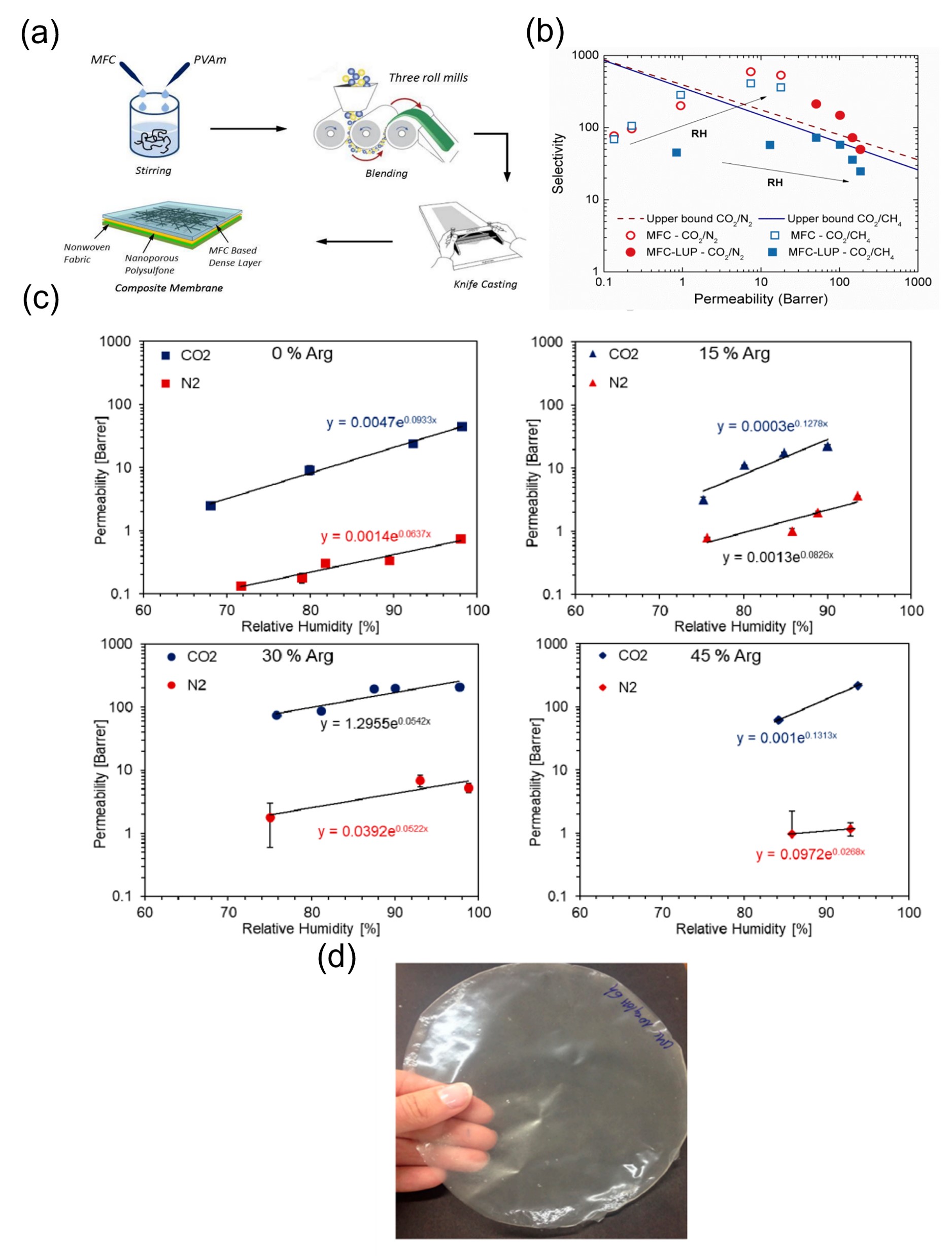
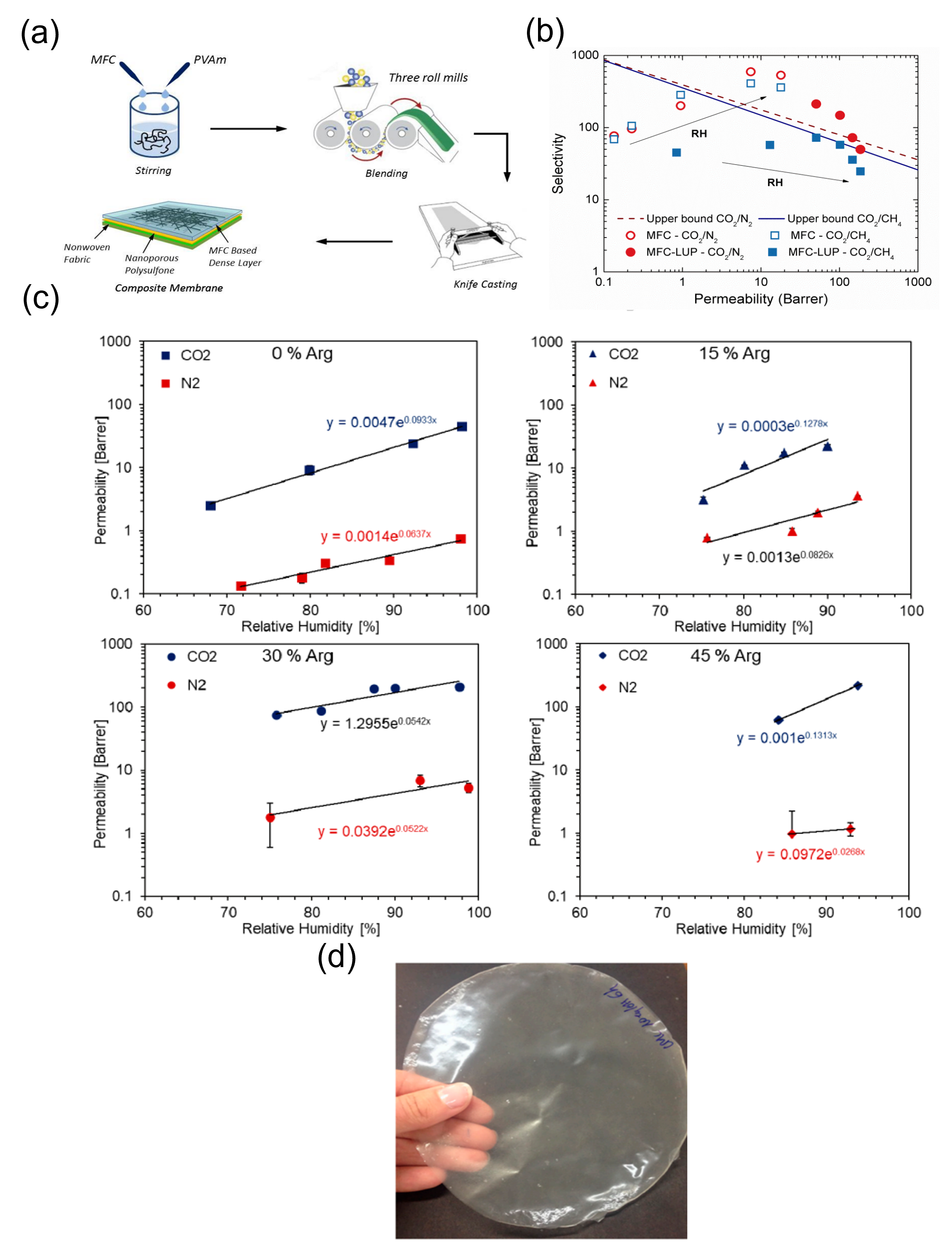
NFigure 1. (a) Pictural biopolymer chitosan (CS) is a marine wasteorial representation of generation of membranes. Reproduced with permission from [32]. (b) Graph showing selectivity vs permeability of different material which is inexpensive, abundantly available, renewable, environmentally friendly and biodegradable polysaccharide and is the second ms. Reproduced with permission from [32].(c) Single gas permeation results of CMC-NFC with different loadings of Arginine with respect to relative humidity. Reproduced with permission from [34]. (d) Membrane developed without arginine. Reproduced with permission from [34].
3.2. Chitost abund
Nant natural biopolymer chitosacchn (CS) is a maridne waste mafter ceiallulose [39]. CS that may be used in CO2 adsorption because of its ease of processability, low maintenance and energy necessity. CS is inexpensive, abundantly available, renewable, environmentally friendly and biodegradable polysaccharide which is the second most abundant natural polysaccharide after cellulose [39]. CS chains have a large number of basic amine groups which facilitate adsorption of the acidic CO2 molecule on the surface of the adsorbents [40,41]. However, pure chitosan suffers from low surfa ce area resulting lower carrbon dioxide adsorption. H due to the lowenr surfacefo area th, us most of the studies reporting chitosan-derived sorbents aim to fabricate the surface properties of CS and maximize the CO2 adsorption capacity [42]. Like cellulose materials, carbonization to chitosan-based materials has also resulted in efficient CO2 adsorbent which are discussed herein. Hierarchical porous nitrogen-containing activated carbons (N-ACs) were prepared with LiCl-ZnCl2 molten salt as a template derived from cheap chitosan via simple one-step carbonization under Ar atmosphere. The obtained N-ACs with the highest specific surface area of 2025 m2 g−1 and a high nitrogen content of 5.1 wt% were obtained using a low molten salt/chitosan mass ratio (3/1) and moderate calcination temperature (1000 °C). Importantly, using these N-ACs as CO2 solid-state adsorbents, the maximum CO2 capture capacities could be up to 7.9/5.6 mmol g−1 at 0 °C/25 °C under 1 bar pressure, respectively by physisorption mechanism. These CO2 capture capacities of N-ACs were the highest compared to reported biomass-derived carbon materials, and these values were also comparable to most of porous carbon materials. T Moreover, the se N-ACs also showed good selectivity for CO2/N2 separation and excellent recyclability [43]. Chagas et al. reported a green method for CO2 capture by showing the effects of hydrothermal carbonization (HTC) on chitosan’s chemical properties and its potential. HTC allows changes in chitosan’s surfaces and structural properties are modified after HTC which , increases ing the CO2 adsorption capacity by 4-fold compared to the non-HTC treated chitosan [44]. A Kamaran et al. developed acetic acid-mediated chitosan-based porous carbons were developed by K amaran et al. following a combination of hydrothermal carbonization treatment and chemical activation with KOH and NaOH under a flowing stream of nitrogen which developed. The y noticed that would increase the CO2 uptake was repor ted to be 8.36 mmol g−1 for KOH samples and 7.38 mmol g−1 for the NaOH sample. These synthesized carbon adsorbents also exhibited regenerability after four consecutive adsorption–desorption cycles and also high CO2 capture selectivity over N2 gas [45].
Azharul Islam et al. have reported a non-carbonized chitosan–bleaching earth clay composite (Chi–BE) has been reported by Azharul Islam et al. as an efficient adsorbent for CO2. They showed that temperature, adsorbent loading and CO2 concentration exerted significantly positive effects on CO2 adsorption by Chi–BE within the ranges and levels studied, whereas the interaction of adsorbent loading and CO2 concentration only affected CO2 adsorption. The optimum ised faconditionors were 38.13 °C, adsorbent loading of 0.72 g and CO2 concentration of 25%, which produced the adsorption capacity of 7.84 mmol g−1 using the desirability function which was very close to the validation study and the composite can also be recycled which shows its cost-effectiveness [46]. Material type and composition, BET surface area (m2 g−1), pore size (nm)/total pore volume (cm3 g−1), mechanism of adsorption, CO2 capture capacity (mmol g−1) and special features of chitosan-based materials have been tabulated in Table 2.
Table 2. Summary of material type and composition, BET surface area (m2 g−1), pore size (nm)/total pore volume (cm3 g−1), mechanism of adsorption, CO2 capture capacity (mmol g−1) and special features of chitosan-based materials.
|
Material Type and Composition |
BET Surface Area (m2 g−1) |
Pore Size (nm)/Total Pore Volume (cm3 g−1) |
CO2 Capture Capacity (mmol g−1) |
Special Features |
Ref |
|
N-doped Atcivated carbon from chitosan char by KOH activation |
907 |
0.39 |
1.86 |
High CO2/N2 selectivity and excellent recyclability |
[40] |
|
N-doped carbonized chitosan |
849 |
0.5–1.0 nm, 1.0–1.5 nm and 1.5–2.5 nm with maximum pore volume of 0.68 |
3.2 |
Can be used as an electrode material and adsorbent |
[41] |
|
Pyrolyzed chitosan– and chitosan-periodic mesoporous organosilica (PMO)– based porous materials |
376 |
~2 nm, 0.346 |
1.9 at 500 kPa |
Best selectivity for CO2/CH4 separation at 1.5% (m/v) of chitosan solution dried under supercritical CO2 |
[42] |
|
N containing activated carbons (N-ACs) with LiCl-ZnCl2 molten salt as a template derived from cheap chitosan by carbonization. |
2025 |
1.15 |
7.9 mmol g−1 at 0 °C/25 °C, 1 bar |
Selectivity for CO2/N2 separation, excellent recyclability |
[43] |
|
Hydrothermal carbonized (HTC) of chitosan |
2 |
- |
0.45 |
- |
[44] |
|
Acetic acid-mediated chitosan-based highly porous carbon adsorbents |
4168 |
1.386 |
8.36 |
CO2 selectivity over N2 |
[45] |
|
Chitosan-Bleaching earth |
71.26 |
0.19 |
7.65 |
Recyclable |
[46] |
|
Material Type and Composition |
BET Surface Area (m2 g−1) |
Pore Size (nm)/Total Pore Volume (cm3 g−1) |
Mechanism of Adsorption |
CO2 Capture Capacity (mmol g−1) |
Special Features |
Ref |
|
N-doped Atcivated carbon from chitosan char by KOH activation |
907 |
0.39 |
Physisorption |
1.86 |
High CO2/N2 selectivity and excellent recyclability |
[40] |
|
N-doped carbonized chitosan |
849 |
0.5–1.0 nm, 1.0–1.5 nm and 1.5–2.5 nm with maximum pore volume of 0.68 |
Physisorption |
3.2 |
Can be used as an electrode material and adsorbent |
[41] |
|
Pyrolyzed chitosan– and chitosan-periodic mesoporous organosilica (PMO)– based porous materials |
376 |
~2 nm, 0.346 |
Physisorption |
1.9 at 500 kPa |
Best selectivity for CO2/CH4 separation at 1.5% (m/v) of chitosan solution dried under supercritical CO2 |
[42] |
|
N containing activated carbons (N-ACs) with LiCl-ZnCl2 molten salt as a template derived from cheap chitosan by carbonization. |
2025 |
1.15 |
Physisorption |
7.9 mmol g−1 at 0 °C/25 °C, 1 bar |
Selectivity for CO2/N2 separation, excellent recyclability |
[43] |
|
Hydrothermal carbonized (HTC) of chitosan |
2 |
- |
Adsorption by the acid−base reaction between the CO2 molecule and the basic sites of the materials, associated with the presence of nitrogen atoms |
0.45 |
- |
[44] |
|
Acetic acid-mediated chitosan-based highly porous carbon adsorbents |
4168 |
1.386 |
Physisorption |
8.36 |
CO2 selectivity over N2 |
[45] |
|
Chitosan-Bleaching earth |
71.26 |
0.19 |
Physisorption |
7.65 |
Recyclable |
[46] |
3.3. Lignin-Based Materials for CO2 Capture3.3. Lignin
Lignin is a class of complex organic polymers that form key structural materials ind the support tin ssues of most plants . Lignins are particularly important in the formation of cell walls, especially in wood and bark. Chemically, lignins are polymers made by cross-linking phenolic precursors. T Zhao et al. have reported the synthesis of multiscale carbonized carbon supraparticles (SPs) by soft-templating lignin nano- and microbeads bound with cellulose nanofibrils (CNFs) have been reported by Zhao et al. which were well suited for CO2 capture (1.75 mmol g−1), while di presplayenting a relatively low pressure drop (~33 kPa·m−1 calculated for a packed fixed-bed column). Moreover, the carbon SPs did not require doping with heteroatoms for effective CO2 uptake and also showed regeneration after multiple adsorption/desorption cycles [47]. N While non-carbonized lignin-based materials have been reported by Shao et al. and Liu et al. [48,49]. L They have reported lignin depolymerization wa s done selecting six aromatic units from lignin and d eveloped O-rich hyper-cross-linked polymers (HCPs) was developed by one-pot Friedel–Crafts alkylation reaction for CO2 capture. I Lignin-modified hyper-cross-linked nanoporous resins for efficient CO2 capture have been described in a recent report, t. The resins were synthesized from lignin, 4-vinylbenzyl chloride, and divinylbenzene by free radical polymerization reaction followed by Friedel–Crafts reaction which displayed excellent CO2 capture (1.96 mmol g−1) at 273 K and 1 bar and reusability [49].
3.4. Cyclodextrin-Based Materials for CO2 Capture3.4. Cyclodextrins
Cyclodextrins are glucopyranosides bound together in various ring sizes renowned for their structural, physical and chemical properties. D They are widely used in industrial applications due to their unique ability to encapsulate other molecules, they are widely used in industrial applications [50]. The cyclodextrin (CD)/graphene composite aerogel synthesized by hydrothermal carbonized reaction at 80 °C for 18 h exhibits an adsorption capacity of CO2 at 1.02 mmol g−1 [51]. Cyclodextrin-based non-carbonized materials have been also reported to be efficient CO2 adsorbent [52–54]. Two isostructural cyclodextrin-based CD-MOFs (CD-MOF-1 and CD-MOF-2) are demonstrated to have an inverse ability to selectively capture CO2 from C2H2 by single-component adsorption isotherms and dynamic breakthrough experiments. These two MOFs exhibit excellent adsorption capacity and benchmark selectivity (118.7) for CO2/C2H2 mixture at room temperature [52]. A In addition, a new solid acid adsorbent for CO2 capture derived from β-cyclodextrin has been obtained w and achich eveshows a capacity of 39.87 cm3/g at 3.5 bar [53]. For thermal activation, a rapid temperature-assisted synthesis has been reported to improve the porous structure of the cyclodextrins for CO2 adsorption [54]. Ano their d category of cyclodextrin-based materials involves CO2 adsorption by thermal activation under N2 atmosphere [55,56]. The adsorption thermodynamics of CO2 on β-CD-derived adsorbent by thermal activation have been reported recently [55]. However, the pore formation mechanism during the thermal activation of β-CD for CO2 uptake was systematically investigated by the same group in another study [56].
4. Conclusions
- Synthetic Porous Organic Polymers (POPs) for CO2 Capture
ISyn this review, we have provided an overviewthetic porous organic polymers are a good choice of materials for post-combustion carbon dioxide capture because of their low density, high porosity, large surface area, and high stability. Various types of chemical reactions, such as Suzuki–Miyaura coupling, Sonogashira–Hagihara coupling, Buchwald–Hartwig amination, Schiff-base reaction, Friedel–Crafts reaction, etc., are used to synthesize organic polymers. The desired pore size of the synthesis,polymers is obtained by selecting monomer building blocks and linkers. Affinity for CO2 can apture potential, and key flso be enhanced by post-synthetic modification of the polymers. Various kinds of porous organic polymers have been reported in the literature. Out of them, hyper-cross-linked polymers (HCPs), covalent organic frameworks (COFs), conjugated microporous polymers (CMPs) and covalent triazine-based frameworks (CTFs) were used extensively for CO2 capture [57]. Syntheses and CO2 captors influeure capacities of these four major types of POPs published in the last five years are summarised here. In Table 3, synthetic methods, measured parameters related to CO2 capture, CO2 capture capacities and CO2/N2 selecting the vities of the POPs mentioned in this review are shown.
4.1. Hyper-Crosslinked Polymers (HCPs)
Friedel–Crafts and simple condensation reactions are usually employed to prepare HCPs from monomers. Extensive cross-linking between the monomers creates permanent porosity in the HCPs. In general, HCPs displayed good CO2 capture capacity though the surface area of the majority of these types of polymers is low. Hu et al. synthesized a microporous polymer, termed PIM-1, by one-step condensation of 5,5′,6,6′-tetrahydroxy-3,3,3′,3′-tetramethyl-1,1′-spirobisindane and 2,3,5,6-tetrafluoroterephthalonitrile. Hydrolysis of PIM-1 using NaOH produced the hydrolyzed form hPIM-1. Measured BET surface areas of the polymers were found to be 970 and 780 m2/g for PIM-1 and hPIM-1, respectively. Hydrophilic hPIM-1 exhibited slightly higher CO2 uptake capacity (1.73 mmol g−1 at 298 K and 1 bar) than that of PIM-1. Both polymers are also effective in the uptake of CO2 at low partial pressure such as 0.15 bar. PIM-1 exhibited high competitive adsorption of CO2 over N2 at a high total pressure of 1 bar and a certain level of moisture resistance. PIM-1 can be sol ution-reprocessed keeping its CO2 uptake capacity intact [58]. Fayemiwo et al. synthesized a series of nitrogen-rich HCPs, poly[mer-thacrylamide-co-(ethylene glycol dimerthacrylate)] by copolymerisation of methacrylamide (MAAM) and ethylene glycol dimethacrylate (EGDMA) in different molar ratio via radical initiated bulk polymerizations. Three polymers, termed HCP-MAAM-1, -2, -3 were obtained by increasing the concentrations of MAAM with respect to EGDMA by 1:2:3, respectively. These polymers exhibited high affiniteies towards CO2 at both high and low press ure due to the presence of polar amide groups wit hin the polymer network. CO2 adsorption capacities were found to be 1.56, 1.45, and 1.28 mmol g−1 for HCP-MAAM-1, -2, and -3, respective ly, at 273 K and 1 bar. The reduction in the adsorption capacities with an increase in the concentration of MAAM with respect to EGDMA in the polymers is due to a decrease in the specific surface areas [59]. A series of hydroxyl-based i HCPs was syn the sized by Liu et al. via one-pot Friedel–Cratfts alkylation of benzyl alcohol (BA) using formaldehyde dimethyl acetal (FDA) as external cross-linker and anhydrous FeCl3. Pore volume s of the synthesized HCPs were found to be ver y sensitive to the re action time and amounts of FeCl3 and FDA. The HCPs obt ained by use of optimized amounts of FeCl3 and FDA in the reactions possess high BET-specifivc surface areas up to 1101 m2/g and exhibit high CO2 uptake capacities up to 3.03 mmol g−1 at 273 K and 1 bar [60]. Abdelnaby et al. synthesized an HCP, termed KFUPM-1, by acid-catalyzed condensation of pyrrole, 1,4-benzenediamine and p-formaldehyde. The Dpresence of a high concentration of amine groups in the backbone of this meso-/macroporous polymer resulted in high selectivity (141) for CO2 over N2 and moderate CO2 uptake capacity of 1.04 mmol g−1 at 298 K and 1 bar [61]. In a similar manner, anothe r HCP, termed KFUPM-2, was synthesized by Friedel−Crafts alkylation polymerization of phenothiazine and pyrrole (1:3 ratio) using p-formaldehyde as a cross-linker in the presence of FeCl3 as a catalyst. This microporous polymer showed a moderate CO2 uptake capacity of 1.04 mmol g−1 with CO2/N2 selectivity of 51 at 298 K and 1 bar [62]. A novel y none-linked porous organic polymer, named y-POP, was synthesized by Kong et al. by Sonogashira coupling of 1,3,5-triethynylbenzene w ith terephthaloyl chloride. Post-modification of y-POP by tethering alkyl amine species produced y-POP-NH2. Increase in amine loading, the CO2 adsorption capacity of y-POP-NH2 gradually incre ased up to 1.95 mmol g−1 at 273 K and 1 bar from the corresponding value of 1.34 mmol g−1 of y-POP under the same conditions [63]. Cross-linking of a copolymer polydivinylbenzenechloride (PDV) was performed by reaction with anhydrous FeCl3 and CCl4 to produce methylene cross-linked HCP, named PDV-pc-1. Another carbonyl cross-linked HCP, named PDV-pc-2 was obtained in a similar reaction without using CCl4. Studies showed that PDV-pc-1 has a higher BET-specific surface area (686 m2/g) than PDV-pc-2 (635 m2/g). However, the CO2 uptake capacity of PDV-pc-2 (1.95 mmol g−1) was found to be higher than PDV-pc-1 (1.45 mmol g−1) at 273 K and 1 bar. Higher porosity and the presence of a large number of carbonyl functional groups made PDV-pc-2 a better CO2-capturing agent [64]. Sharma et al. synthesized a heptazine-based microporous polymeric network, termed HMP-TAPA, by nucleophilic substitution of trichloroheptazine (TCH) by tris-(4-aminopenyl) amine (TAPA). The presence of a large number of CO2-philic -N-, -NH, and -NH2 groups on the surface enhanced CO2 sorption capacity of HMP-TAPA, which exhibited a CO2 uptake capacity of 2.42 mmol g−1 at 273 K and 1 bar. In addition, this polymer catalyzed the cycloaddition of CO2 with epoxides under mild conditions to generate cyclic carbonates with high yield and selectivity [65]. A series of N-containing HCPs was synthesized from triphenylamine (TPA) and/or carbazole (Cz) monomers by one-step cross-coupling reactions including Scholl coupling and solvent knitting Friedel–Crafts reactions. Among these microporous polymers, HCP1, HCP2, and HCP3, prepared by Scholl coupling exhibited high CO2 uptake capacities (2.38–2.64 mmol g−1 at 273 K and 1 bar) due to high porosity though measured surface are as were found to be low. On the other hand, HCP4, HCP5, and HCP6, prepared by 1,2-dichloroethane knitting Friedel–Crafts reactions were found to be m eso/macroporous in nature and they exhibited com paratively low CO2 uptake capacities (0.9–1.52 mmol g−1 at 273 K and 1 bar) due to their low porosity [66]. Mohamed g et al. synthesized two microporous HCPs, named TPE-CPOP1 and TPE-CPOP2, by AlCl3 catalysed Friedel–Crafts reactions of tetraphenylethene (TPE) monomer with and without cyanuric chlorid e, respectively. CO2 adsorption capacities were found to be 0.89 and 1.15 mmol g−1 at 298 K and 1 bar for TPE-CPOP1 and TPE-CPOP2, respectively. Higher CO2 uptake capacity of TPE-CPOP2 is caused by the presence of triazine units in the framework. The carbonization and KOH activation process of these HCPs produced porous carbon materials which exhibited high CO2 uptake capacities (Figure 2a) [67]. Qiao et al. prepared two HCPs, named P0 and P1, by one-step reaction of eacuh p-terphenyl and 4-amino-p-terphenyl monomers with AlCl3 catalyst in dichlorometane, respectively. Further reaction of nitrobenzene and P1 in 1:3 ratios afforded another HCP, named P2. CO2 uptake capacities of P0, P1 and P2 were found to be 3.79, 4.24, and 3.02 mmol g−1 at 273 K and 1.13 bar. The remarkable CO2 uptake capacity of P1 was attributed due to the presence of the amine groups in the polymeric network [68]. Zhou et al. synthesized a series of microporous HCPs by Friedel−Crafts polymerization of each hexaphenylbenzene (HPB), triphenylbenzene (TPB), s pirobisfluorene (SBF), and triptycene (Trip) monomers catalyzed by AlCl3 in the presence of dichloromethane, which acts as both the solvent and as a cross-linker. The polymers were f unctionalized further by covalently attaching −NO2, −NH2, and −SO3H groups. Generally, surface functionalization of the polymers causes loss of porosity but nitro- and sulfonic acid-containing polymers retained a good amount of initial porosity. Sulfonated polymers showed high BET surface areas in the range of 1145 to 1390 m2/g and highest CO2 uptake capacity reached to 6.77 mmol g−1 at 273 K and 1 bar [69]. Abdelnaby et al. synthesized two azo-linked porous organic polymers, termed man-Azo-P1 and man-Azo-P2, by diazotization reactions of 4,4′-diaminobiphenyl (benzidine) and 4,4′-diaminodianiline, respectively, with phloroglucinol in aqueous med ium at 0 °C. The CO2 uptake capacities were found to be 1.43 and 0.89 mmol g−1 at 273 K and 1 pbar for man-Azo-P1 and man-Azo-P2, respectively. The former exhibited better CO2 uptake capacity due to the presence of polar azo and hydroxy functional groups in the framework [70].
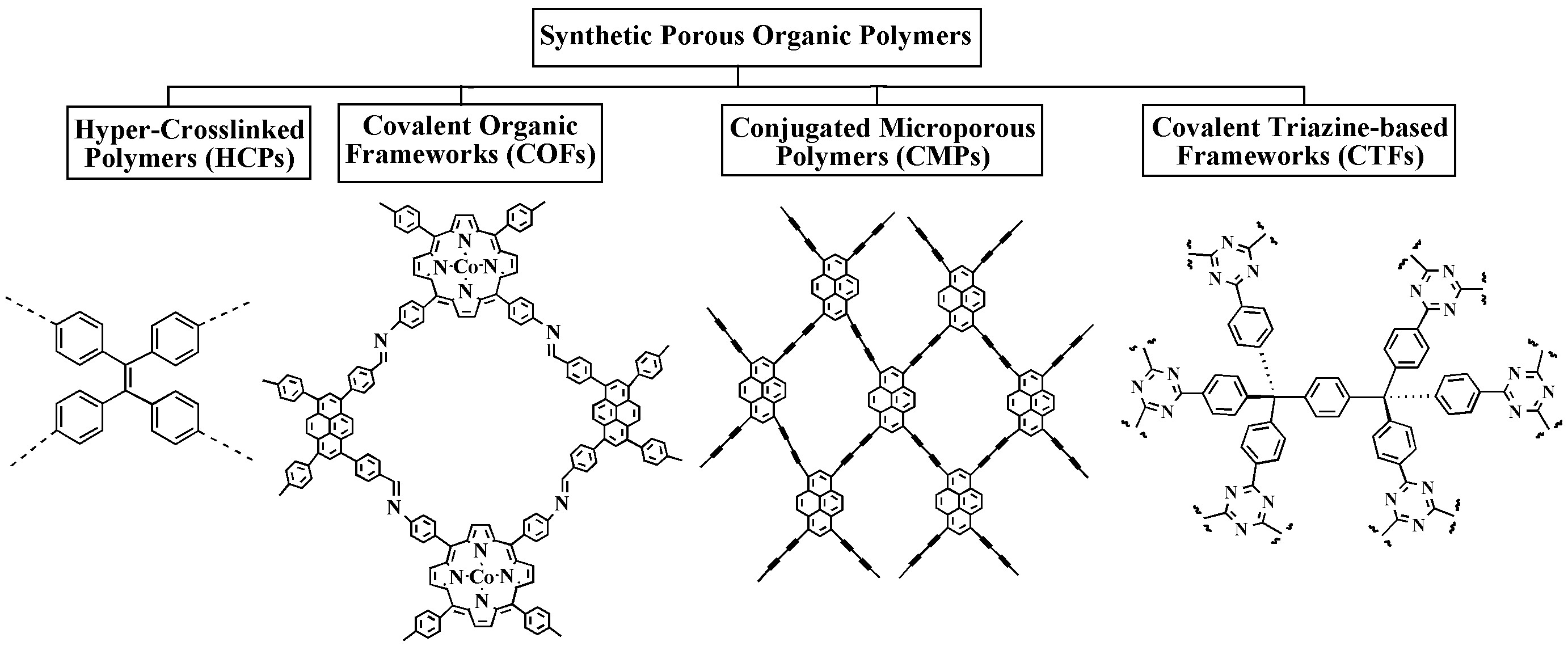
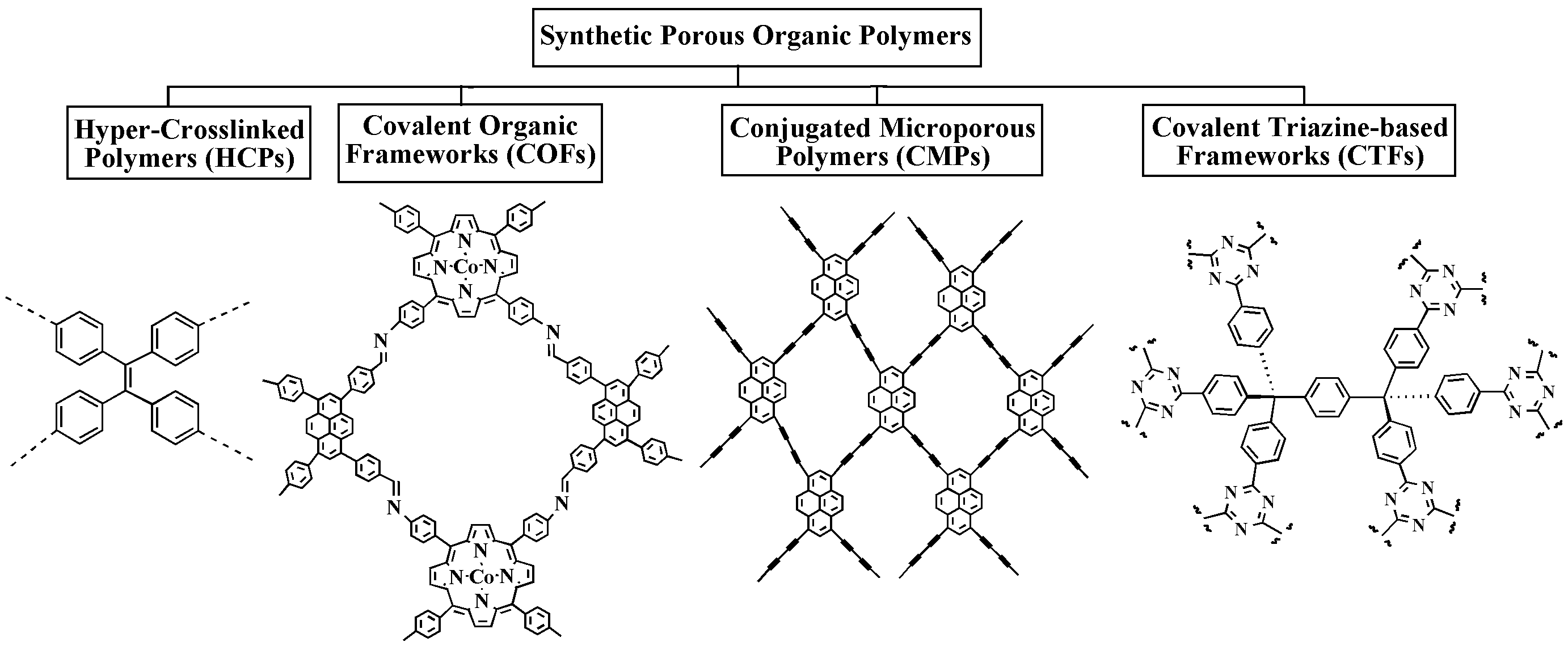
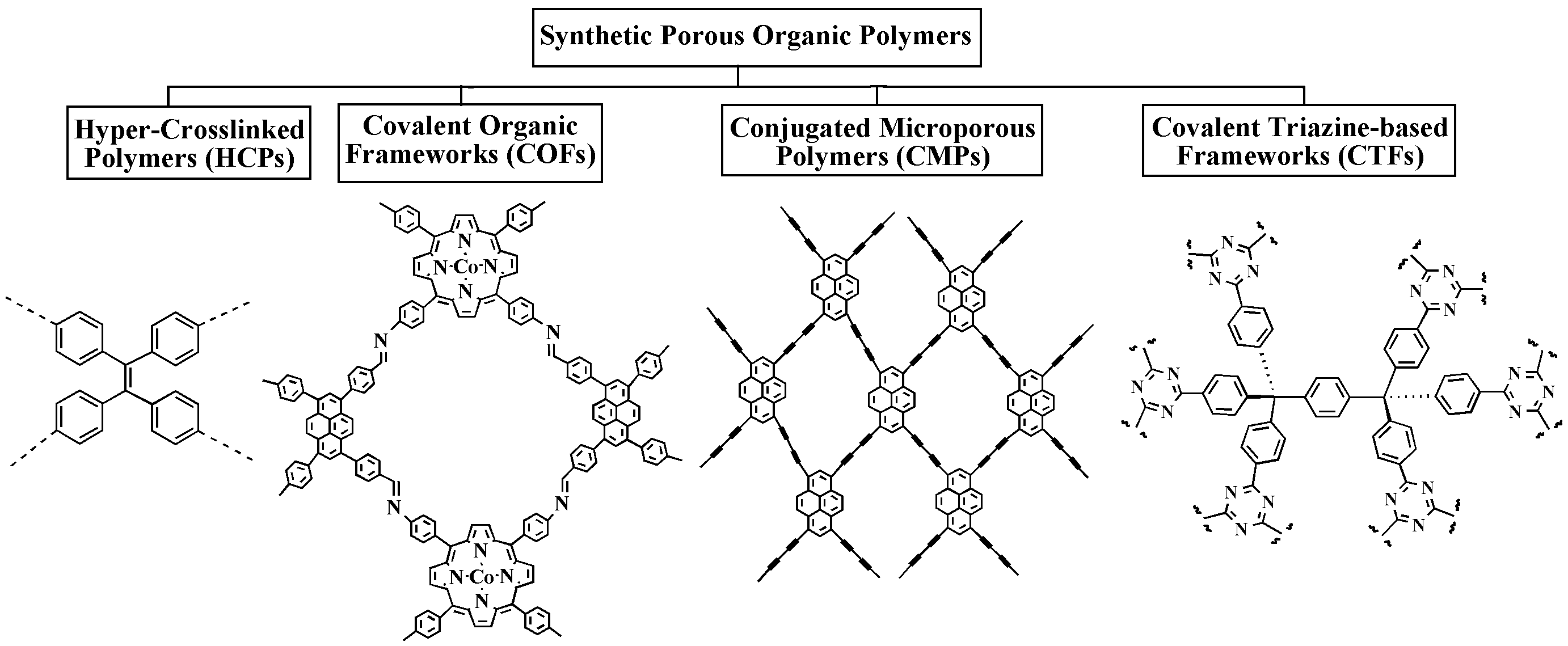
Figure 2. Types of syntheticand porous organic polymers (POPs) with selected examples: (a) TPE-CPOP1. Adapted with permission from [67]. (b) Co(II) @ TA-TF COF. Adaptes fod with permission from [72]. (c) LKK-CMP-1. Adapted with permission from [76]. (d) CTF-hex1–6. Adapted withe l permission from [85].
Table 3. Summargy of synthetic proce-scale ss, surface area, pore size, total pore volume, CO2 uptake capacity, CO2/N2 selectivity and heat of adsorption of the synthetic POPs.
|
POPs |
Synthetic Process |
SBETa
|
Pore Sizeb |
Vtotc |
CO2 Capture Capacityd
|
CO2/N2 Selectivitye |
Qstf |
Ref. |
||
|
273 K |
298 K |
273 K |
298 K |
|
|
|||||
|
PIM-1 |
One-step condensation in presence of K2CO3 |
970 |
<2, 2–50 |
0.70 |
- |
1.66 |
- |
19.3 |
20.8 |
[58] |
|
hPIM-1 |
Hydrolyzation of PIM-1 using NaOH |
780 |
<2, 2–50 |
0.49 |
- |
1.73 |
- |
11.7 |
32.8 |
[58] |
|
HCP-MAAM-1 |
Radical initiated bulk copolymerization |
298 |
2–40 |
0.47 |
1.56 |
0.92 |
45–86 |
38–48 |
28–35 |
[59] |
|
HCP-MAAM-2 |
Radical initiated bulk copolymerization |
142 |
2–40 |
0.87 |
1.45 |
0.85 |
50–99 |
38–63 |
28–35 |
[59] |
|
HCP-MAAM-3 |
Radical initiated bulk copolymerization |
83 |
2–40 |
0.24 |
1.28 |
0.79 |
52–104 |
45–72 |
28–35 |
[59] |
|
BAHCP-7 |
Friedel-Crafts alkylation polymerization
|
1101 |
1.7 |
1.15 |
3.03 |
1.96 |
35 |
- |
26–28 |
[60] |
|
KFUPM-1 |
Acid catalyzed polycondensation |
305 |
- |
- |
1.52 |
1.04 |
- |
141 |
34 |
[61] |
|
KFUPM-2 |
Friedel−Crafts alkylation polymerization |
352 |
- |
0.21 |
1.75 |
1.04 |
- |
51 |
34 |
[62] |
|
y-POP |
Sonogashira coupling |
226 |
0.74, 1.2, 34 |
- |
1.34 |
- |
20 |
- |
29 |
[63] |
|
y-POP-A1 |
Amine modification of y-POP |
145 |
- |
- |
1.50 |
- |
239 |
- |
46.8 |
[63] |
|
PDV |
Radical polymerzation |
364 |
1–2 |
0.20 |
0.66 |
0.25 |
31.3 |
- |
36.9 |
[64] |
|
PDV-pc-1 |
Friedel−Crafts reaction of PDV |
686 |
1–2 |
0.37 |
1.45 |
0.59 |
16.4 |
- |
34.3 |
[64] |
|
PDV-pc-2 |
Friedel−Crafts reaction of PDV |
635 |
1–2 |
0.33 |
1.95 |
0.80 |
46.8 |
- |
39.7 |
[64] |
|
HMP-TAPA |
Polymerization via nucleophilic substitution reaction |
424 |
0.7–1.2, 2–4 |
- |
2.42 |
- |
26.27 |
30.79 |
32.8 |
[65] |
|
HCP1 |
Scholl coupling |
534.5 |
- |
0.32 |
2.64 |
1.57 |
23.6 |
- |
46.7 |
[66] |
|
HCP2 |
Scholl coupling |
215.7 |
- |
0.11 |
2.38 |
1.51 |
30.2 |
- |
28.0 |
[66] |
|
HCP3 |
Scholl coupling |
199.9 |
- |
0.12 |
2.47 |
1.46 |
26.7 |
- |
36.7 |
[66] |
|
HCP4 |
Friedel−Crafts alkylation polymerization |
10.8 |
- |
0.023 |
1.05 |
0.72 |
8.6 |
- |
26.2 |
[66] |
|
HCP5 |
Friedel−Crafts alkylation polymerization |
34.8 |
- |
0.065 |
1.52 |
0.72 |
15.4 |
- |
39.8 |
[66] |
|
HCP6 |
Friedel−Crafts alkylation polymerization |
30.3 |
- |
0.061 |
0.90 |
0.42 |
7.0 |
- |
33.0 |
[66] |
|
TPE-CPOP1 |
Friedel-Crafts polymerization |
489 |
1.49, 1.82 |
0.269 |
0.99 |
0.89 |
- |
- |
- |
[67] |
|
TPE-CPOP2 |
Friedel-Crafts polymerization |
146 |
2.57 |
0.1 |
1.26 |
1.15 |
- |
- |
- |
[67] |
|
TPE-CPOP1-800 |
Carbonization and KOH activation of TPE-CPOP1 |
1177 |
1.04, 2.99 |
0.48 |
3.19 |
1.74 |
- |
- |
- |
[67] |
|
TPE-CPOP2-800 |
Carbonization and KOH activation of TPE-CPOP2 |
1165 |
1.02, 2.29 |
0.62 |
2.93 |
1.72 |
- |
- |
- |
[67] |
|
P0 |
Friedel-Crafts polymerization |
1062 |
5.65 |
0.69 |
3.79 |
- |
- |
18.28 |
24–32 |
[68] |
|
P1 |
Friedel-Crafts polymerization |
447 |
1.91 |
0.21 |
4.24 |
- |
- |
20.97 |
24–32 |
[68] |
|
P2 |
Condensation polymerization using base |
242 |
1.94 |
0.12 |
3.02 |
- |
- |
34.52 |
24–32 |
[68] |
|
PIM-TPB |
Friedel−Crafts polymerization |
2540 |
0.35, 0.56, 0.86 |
1.300 |
5.00 |
2.57 |
- |
14.1 |
25.2 |
[69] |
|
PIM-TPB-NO2 |
-NO2 functionalization of PIM-TPB using HNO3 |
950 |
0.35, 0.56, 0.86 |
0.553 |
5.13 |
3.11 |
- |
24.7 |
32.1 |
[69] |
|
PIM-TPB-NH2 |
-NH2 functionalization by Na2S2O4 treatment of PIM-TPB-NO2 |
710 |
0.35, 0.56, 0.86 |
0.333 |
4.45 |
2.98 |
- |
26.1 |
31.7 |
[69] |
|
PIM-TPB-HSO3 |
-SO3H functionalization of PIM-TPB using H2SO4 |
1585 |
0.35, 0.56, 0.86 |
0.852 |
6.77 |
4.07 |
- |
17.9 |
29.0 |
[69] |
|
man-Azo-P1 |
Diazotization of aromatic diamines followed by coupling with aromatic alcohol |
290 |
- |
0.33 |
1.43 |
- |
80 |
- |
40 |
[70] |
|
man-Azo-P2 |
Diazotization of aromatic diamines followed by coupling with aromatic alcohol |
78 |
- |
0.15 |
0.89 |
- |
110 |
- |
23 |
[70] |
|
TPE-COF-I |
Acid catalysed condensation |
1535 |
- |
1.65 |
3.06 |
1.69 |
- |
- |
- |
[71] |
|
TPE-COF-II |
Acid catalysed condensation |
2168 |
- |
2.14 |
5.30 |
2.70 |
- |
- |
- |
[71] |
|
Co(II)@TA-TF COF |
Solvothermal reaction |
1076 |
1.6 |
- |
- |
3.84 |
- |
- |
- |
[72] |
|
COF-609-Im |
Acid catalysed condensation |
724 |
- |
- |
1.5 |
- |
- |
- |
- |
[73] |
|
COF-609 |
aza-Diels−Alder cycloaddition of COF-609-Im followed by amination |
- |
- |
- |
0.076 |
- |
- |
- |
- |
[73] |
|
CMP-LS1 |
Suzuki coupling |
493 |
0.4–1.4 |
0.32 |
1.38 |
0.76 |
23.2 |
- |
30.2 |
[75] |
|
CMP-LS2 |
Suzuki coupling |
1576 |
0.4–1.4 |
1.06 |
3.88 |
2.1 |
27.9 |
- |
31.6 |
[75] |
|
CMP-LS3 |
Sonogashira-Hagihara coupling |
643 |
0.4–1.4 |
0.37 |
1.88 |
1.07 |
19.8 |
- |
30.4 |
[75] |
|
LKK-CMP-1 |
Oxidative homocoupling |
467 |
0.59 |
0.371 |
2.22 |
1.38 |
- |
44.2 |
35 |
[76] |
|
Azo-Cz-CMP |
One-pot reductive reaction using NABH4 |
315 |
0.79 |
- |
2.13 |
0.91 |
- |
- |
32.08 |
[77] |
|
Azo-Tz-CMP |
One-pot reductive reaction using NABH4 |
225 |
1.18 |
- |
1.36 |
0.64 |
- |
- |
18.36 |
[77] |
|
TrzPOP-1 |
Polycondensation |
995 |
1.7 |
- |
6.19 |
3.53 |
108.4 |
42.1 |
29 |
[78] |
|
TrzPOP-2 |
Polycondensation |
868 |
1.5 |
- |
7.51 |
4.52 |
140.6 |
75.7 |
34 |
[78] |
|
TrzPOP-3 |
Polycondensation |
772 |
1.4 |
- |
8.54 |
5.09 |
167.4 |
94.5 |
37 |
[78] |
|
NT-POP-5 |
Suzuki cross-coupling |
8 |
- |
- |
0.78 |
- |
- |
- |
25.4–19.4 |
[79] |
|
NT-POP@800-4 |
Pyrolysis of NT-POP-1-6 at 800 oC |
736 |
- |
0.463 |
3.96 |
3.25 |
36.9 |
- |
25.4–19.4 |
[79] |
|
CTF1 |
ZnCl2 catalyzed ionothermal reaction |
1654 |
- |
1.06 |
5.23 |
3.32 |
- |
11 |
34.0 |
[80] |
|
CTF4 |
ZnCl2 catalyzed ionothermal reaction |
784 |
- |
0.41 |
4.39 |
3.83 |
- |
46 |
21.5 |
[80] |
|
CTF-DCE |
ZnCl2 catalyzed ionothermal reaction |
1355 |
0.6, 1.2, 2–4 |
0.93 |
4.34 |
3.59 |
54 |
- |
24.9 |
[81] |
|
CTF-PF-4 |
ZnCl2 catalyzed ionothermal reaction |
889 |
1.7–1.9 |
0.58 |
2.0 |
1.27 |
- |
- |
>33 |
[82] |
|
ICTF-Cl |
ZnCl2 catalyzed ionothermal reaction |
751 |
- |
0.458 (approx.) |
2.36 |
1.41 |
119.1 |
68.74 |
- |
[83] |
|
ICTF-SCN |
ZnCl2 catalyzed ionothermal reaction |
1000 (approx.) |
- |
0.458 (approx.) |
2.48 |
1.40 |
39.28 |
24.82 |
- |
[83] |
|
CTF-N4 |
ZnCl2-mediated cyclotrimerization |
701 |
- |
0.31 |
3.4 |
2.2 |
45 |
- |
44 |
[84] |
|
CTF-N6 |
ZnCl2-mediated cyclotrimerization at high temperature |
1236 |
- |
0.51 |
5.0 |
3.4 |
36 |
- |
26 |
[84] |
|
CTF-hex4 |
ZnCl2-mediated ionothermal reaction |
609 |
- |
0.31 |
3.4 |
- |
- |
- |
29 |
[85] |
|
CTF-hex6 |
ZnCl2-mediated ionothermal reaction |
1728 |
- |
0.87 |
3.1 |
- |
- |
- |
37 |
[85] |
|
An-CTF-20-500 |
ZnCl2-mediated ionothermal reaction |
700 |
1.06, 1.66 |
- |
5.25 |
2.69 |
- |
- |
- |
[86] |
aBET surface andrea (m2 g−1). bPore size (nm). cTotal pore volume (cm3 g−1). dCO2 capturate capacity (mmol g−1) at 1 bar. eIAST (ideal adson of rbed solution theory) for the mixture including 85% of N2 and 15% of CO2 at 1 bar. fHeat of absoromption ( kJ mol−1) of fCO2 (calcue gaslated using Clausius-Clapeyron equation at low CO2 loading). I
4.2. Covalent Organic Frameworks (COFs)
Precise control of the structure and pore size of COFs is performed by choosing the monomer building blocks and reaction conditions. Gao et al. synthesized two 2D-COFs by condensation of amine and aldehyde functionalized tetraphenylethane (TPE). Solvent controlled [4 f+ 4] condensation produced TPE-COF-I and an unusual [2 + 4] condensation pathway produced TPE-COF-II. TPE-COF-II exhibited higher CO2 capture capacity (5.3 mmol g−1 at 273 K and 1 atm) than TPE-COF-I (3.06 mmol g −1) due to the presence of unreacted -CHO groups in the framework [71]. Li et al. designed and synthesized a metalloporphyrin-containing COF by solvothermal reaction of cobalt(II)-5,10,15,20-tetrakis(4-aminophenyl)porphyrin (Co(II)@TAPP) and tetrakis(4-formylphenyl)pyrene (TFPPy). The COF captures CO2 and catalytically converts it into cycl ic carbonates under mild conditions. BET surface area of the microporous COF was found to be 1076 m2/g and the pore size was 1.6 nm. High surface area, good stability and the pres ence of a single type of micr opores made it- a good catalyst. The COF exhibited a strong CO2 adsorption capacity of 3.84 mmol g−1 (16.9 wt%) at 298 K and 1 bar. Co(II)@TAPP units in the COF are alternately stacked perpendicular to the porphyrin plan es with a slipped distance of 1.7 Å which fits with the size of CO2. Adsorbed CO2 molecules interact effectively with the metal centres (catalytic sites) and facilitate catalytic reactions (Figure 2b) [72]. Lyu et al. established a new synthetic strategy to covalently attach aliphatic amines to construct COFs. First, an imine -linked COF, named COF-609-Im, was synthesized through imine condensation between 2,4,6-tris(4-formylphenyl)-1,3,5-triazine (TFPT) and 4,4′-diaminobenzanilide (DABA). Crystallization of COF-609-Im, followed by conversion of its imine linkage to base-stable tetrahydroquinoline (THQ) linkage through aza-Diels−Alder cycloaddition produced COF-609-THQ-Im. Finally, the covalent incorporation of tris(3-aminopropyl)amine (TRPN) into the framework produced COF-609. All three COFs are porous amorphous in nature and the BET surface area of COF-609-Im was found to be 724 m2/g. CO2 capture capacity of COF-609 was found to be 6.8 cm3/g (0.304 mmol g−1) which is 1360 times higher compared to that of COF-609-THQ-Im at 0.4 mbar CO2 at 273 K. Further 29% increase in CO2 capture was observe d in the presence of humidity. This condition is comparable to direct air capture of CO2. Strong chemisorptions of CO2 by aliphatic amines incorporated into COFs made these sorbents such efficient capturing agents at low CO2 pressures. These three COFs also exhibited excellent CO2 capture capacities at 40 mbar (comparable to post-combustion capture from natural gas burned flue gas) and 150 mbar (comparable to post-combustion capture from coal-fired flue gas) pressures of CO2 [73].
4.3. Conjuga sted Microporous Polymers (CMPs)
Usually, CMPs are prepared by couplingn/cross-coupling reactions of aromatic monomers by many well-known react ions, such as, Suzuki, Sonogashira, Yamamoto cross-coupling reactions. Pore size, surface areas and CO2-philic nature of the polymers can be tuned by proper selection of monomers, reaction type and post-synthetic modifications [74]. Wang et al. synthesized three novel biphenylene-based CMPs, termed CMP-LS1, CMP-LS2 and CMP-LS3, by palladium-catalyzed Suzuki and Sonogashira–Hagihara cross-coupling reactions of 3,4′,5-tribromobiphenyl (TBBP) with each 1,4-phenylenediboronic acid, 1,3,5-tris(4,4,5,5-tetramethyl-1,3,2-dioxaborolan-2-yl)benzene and 1,3,5-triethynylbenzene, respectively. BET surface areas of these porous polymers we re found to be 493, 1576 and 643 cm2/g for CMP-LS1, CMP-LS2 and CMP-LS3, respectively. Among the three CMPs, CMP-LS2 exhibited highest CO2 adsorption capacity of 3.88 mmol g−1 at 273 K and 1 bar due to its large surface area [75]. By oxidative homocoupling of 1,3,6,8-tetraethynylpyreqne monomer using Pd(II)-Cu(I) catalysts Ren et al. prepared a CMP, named LKK-CMP-1. This 1,3-diyne linked CMP exhibited moderate CO2 uptake capacity (2.22 mmol g−1 at 273 K and 1 bar) (Figure 2c) [76]. Saber et al. synthesized two azo-linked CMPs, termed Azo-Cz-CMP and Azo-Tz-CMP, by reduction of the corresponding monomers 3,6-dinitro-9-(4-nitrophenyl) carbazole (Cz-3NO2) and 3,7-dinitro-10-(4-nitrophenyl)-10H-phenothiazine (Tz-3NO2), res pectively, using sodium borohydride (NaBH4). BET surface areas of bot h CMPs were found to be low avnd pore size s centered at 0.79 and 1.18 nm for Azo-Cz-CMP and Azo-Tz-CMP, respectively. The former exhibited hig her CO2 capture value of 2.13 mmol g−1 at 298 K and 1 bar than the later which showed 1.36 mmol g−1 CO2 capture capacity under same conditions [77].
4.4. Covalent Tresiazine-Based Frameworks (CTFs)
High nitrogen content of the aromatic triazine (C3N3) rings in the CTFs enhances affinity for CO2. Furthermore, high stability and abundant micrgopores in the surface made CTFs potential CO2 capturing agents [5]. Das et al. synthesized three CTFs, namely TrzPOP-1, -2 and -3, via polycondensation of two tetraamine bearing triazine ring a nd three different dialdehydes (>two of them contain phenolic –OH groups). TrzPOP-1000 , -2 and -3 possess high BET surface areas of 995, 868 and 772 m2/g), respectively, and they exhibited high CO2 uptake capacities of 6.19, 7.51 and 8.54 mmol g−1, respectively, at 273 K and 1 bar. Though BET surface areas of TrzPOP-2 and TrzPOP-3 are comparatively low still they exhibited high CO2 uptakes because of the presence of phenolic –OH groups [78]. Yao et al. synthesized a series of six CTFs, termed NTPOP-1 to -6, by Suzuki cross-coupling driven polycondensation of N2, N4, N6-tris(4-bromophes, >2 nyl)-1,3,5-triazine-2,4,6-triamine (TPTT) and a number of benzeneboronic monomers or ethynyl monomers. BET surface areas of the NTPOPs were found to be in the lower side and highest CO2 uptake was 0.78 mmol g−1 at 273 K and 1.05 bar. Carbonization of these NTPOPs at 800 °C produced pore-tunable porous carbon materials which exhibited excellent CO2 adsorption capacity, of 2.83–3.96 mmol g−1 at 273 K and 1.05 bar [79]. A set of five CTFs (CTF1–5) were prepared by ionothermal reactions of dicyano-aryl or heteroaryl monomer and molten ZnCl2 in 1:5 molar ratio at temperature 400 °C (first 10 h) and > 600 °C (next 10 h). Obtained CTFs were found to be bimodal micro-mesoporous in nature and they displayed high specific surface areas (up to 1860 m2/g). Selected polymers of this series displayed excellent CO2 uptake and highest uptake value was found to be 5.23 and 3.83 mmol g−1 at 273 and 298 K, respectively, at ambient pressure [80]. In a similar way, Dang et al. synthesized a CTF, termed CTF-DCE, via ZnCl2 catalyzed ionothermal trimerization of di(4-cyanophenyl)ethyne. CTF-DCE displayed high BET surface area of 1355 m2/Ng and excellent CO2 capture capacity of 4.34 mmol g−1 at 273 K and 1 bar [81]. Utilizing the similar strategy, a series of four CTFs based on imidazolium salts were synthesized by Xu et al. via ionothermal reactions of nitriles and ZnCl2 in different ratios at 400 °C. The obtained CTFs, were termed as CTF-Cl-1, CTF-Cl-2, CTF-PF-3, and CTF-PF-4 based on the type and number of counterions (Cl− and PF6−) present. These CTFs displayed high BET surface areas. Pore volumes and sizes of the CTFs can be controlled by simply exchange of counterions. CTF-PF-4 containing highest PF6− content, showed highest CO2 adsorption of 2.0 Ammol g−1 [82]. Zhu et al. reported synthesis of a series of bipyridinium-based ionic covalent triazine frameworks (ICTFs) with anions Cl− and SCN− through ZnCl2 catalyzed ionothermal polymerization. High specific surface area, microporous structure, ionic nature and high nitrogen content made them excellent CO2 capturing agents. The surface area and porosity can be regulated by adjusting the anions. Both ICTF-SCN and ICTF-Cl showed high CO2 uptake capacities of 2.48 and 2.36 mmol g−1 at 273 K and 1 bar, respectively [83]. Thre e PhNH-, PhO-, and PhS-linked CTFs were synthesized by Liao et al. via ZnCl2 me diated cyclotrimerization of nitrile-containing monomers including 2,4,6-trims(4-cyanophenylamino)-1,3,5-triazine (TAT), 2,4,6-tris(4-cyanophenoxy)-1,3,5-triazine (TOT), and 2,4,6-tris(4-cyanobenzenesulfenyl)-1,3,5-triazine (TST) by stepwise heating method. The se microporous CTFs possess high BET surface areas and found to be excellent CO2 sorbent's . The PhNH-linked CTF prepared at high temperature (600 °C) displayed very high CO2 ads orption capacity (5.0 mmol g−1 at 273 K and 1 bar). The CO2 capture performacnces of the three CTFs were found to be in the order of PhNH- > PhO- > PhS-linked CTF [84]. Wessely et al. reported synthesis of a series of CTFs using pseudo-octahedral hexanitrile 1,4-bis(tris(4′-cyanophenyl) methyl) benzene (BTB-nitrile) monomer. Among these, CTF-hex6 was prepared under ionothermal reaction conditions wit h ZnCl2 at 400 °C and CTF-hex1 was prepared under mild reaction conditions with the strong Brønsted acid trifluoromethanesulfonic acid at room temperature. In addition, the BTB-nitrile was combined with different di-, tri-, and tetranitriles as a second linker under ionothermal reactions under the same conditions produced mixed-linker CTFs, named CTF-hex2-6. These CTFs displayed BET surface alreas in a wide range of 493 m2/g to 1728 m2/g.
U They exhibited CO2 capture capacities in the range 2.5 to 3.4 mmol g−1 at 273 K and 1 bar (Figure 2d) [85]. A series of porous covalent triazine framework (An-CTFs) based on 9,10 dicyanoanthracene (An-CN) units was prepared by Mohamed et al. via ionothermal reactions of AnCN and molten ZnCl2 in two different molar ratios (1:10 and 1:20) at two different temperatures (400 °C and 500 °C). These microporous highly stable An-CTFs possessing moderate BET surface areas ranging from 406 to 751 m2/g exhibited high CO2 adsorption capacity up to 5.65 mmol g−1 at 273 K and 1 bar [86].
- Conclusions and Outlook
In this review, we have summarized synthesis, CO2 hcapture capacities and influential fas ctors behind the CO2-philicity of some novel nade signifitural and synthetic POPs reported in the literature in the last five years. Though CO2 capture capacities of biopolymers are gent progress thus far, but there are erally low but microporous and nanoporous materials derived from them exhibited superior adsorption capacity. Particularly, nanocellulose-based membranes were found to be potential candidates for large-scale capture of CO2 and separatill mon from flue gas. On average, synthetic POPs including HCPs, COFs, CMPs and CTFs showed higher CO2 uptake capacity and selectivity obstacles to overcomthan porous carbonaceous materials. POPs played a major role in the research of developing new materials for post-combustion CO2 capture and separation. SIn general, POPs with high surface area (>1000 m2/g), micropore, and presence of CO2-philic ficaunctional groups (such as -NH2, -OH, etc.) on the surface are proven to be promision and ng candidates for CO2 capturocee. A potential solid adsorbent for large-scale CO2 capture should show >2 mmol g−1 CO2 uptabke, >100 CO2/N2 selectilvity are hamperend good moisture resistivity. At the same time, large-scale production of the adsorbent must be cost-effective.
Although good progress has been achieved so far in CO2 capture using POPs, there are still a lot of challenges. The limited solubility of many biopolymers' low solubility (cellulose, chitin, lignin, etc.) in common solvents hinders surface modification and processability. As a result, creadifficulties arise in the preparation of POPs membranes, which are very helphighly useful for large-scale CO2 caupturake and separation, becomes problematic. Flue gas has a. Many POPs were synthesized using costly monomers and metal catalysts which is a concern for their large-scale applications. The partial pressure of CO2 in as flue gas is as low as 3-–15 kPa and athe temperature between 80 and is in the range of 80–90 °C. TheHence, the CO2 capture capacities ofore, it is POPs at low pressure and high temperature should be improved.
The development of new-generation CO2 capturessary to materials with POPs and biopolymers requires fine-tuning the thermodynamics of the interaction between CO2 and the adsorbent to improve the encergy efficiency of CO2 capture. In most cases, the CO2 capture efficiencapabily of the adsorbents was evaluated by single-component CO2 uptake isotiesherms or breakthrough experiments using a CO2/N2 mixed gas. The presence of bioother minor gases (O2, CO, SOx, NOx) and water vapour in the flymer-derived materiue gas may have significant consequences on the performance of the materials. This issue must be taken into account during the development of new-generation adsorbents. To decrease the cost of scaling up the materials for industrial applications new building blocks, synthetic routes and simple ways of post-functionalization should be explored. To improve the CO2 capture capacities of POPs a ls at high temperatot of effort has already been made. The very fast progress in this field of research strongly indicates that synthetic and biopolymer-based materials will play a major role in developing next-generation CO2 capturing ages and lnts to achieve the sustainable development goals (SDGs).
Author Contributions: Conceptualization, S.K.G. and M.G.; w pressurriting—original draft preparation, S.K.G. and M.G.; writing—review and editing, S.K.G. and M.G. All authors have read and agreed to the published version of the manuscript.
Funding: This research received no external funding.
Institutional Referenview Board Statement: Not applicable
Conflicts of Interest: The authors declare no conflicts of interest.
- Raupach, M.R.; Marland, G.; Ciais, P.; Quẻrẻ, C.L.; Canadell, J.G.; Klepper, G.; Field, C.B. Global and Regional Drivers of Accelerating CO2 Emissions. Proc. Natl. Acad. Sci. USA 2007, 104, 10288–10293.
- Goeppert, A.; Czaun, M.; Prakash, G.K.S.; Olah, G.A. Air as the Renewable Carbon Source of the Future: An Overview of CO2 Capture from the Atmosphere. Energy Environ. Sci. 2012, 5, 7833–7853.
- Qaroush, A.K.; Alshamaly, H.S.; Alazzeh, S.S.; Abeskhron, R.H.; Assaf, K.I.; Eftaiha, A.F. Inedible Saccharides: A Platform for CO2 Capturing. Chem. Sci. 2018, 9, 1088–1100.
- Zeng, Y.; Zou, R.; Zhao, Y. Covalent Organic Frameworks for CO2 Capture. Adv. Mater. 2016, 28, 2855–2873.
- Wang, W.; Zhou, M.; Yuan, D. Carbon Dioxide Capture in Amorphous Porous Organic Polymers. J. Mater. Chem. A 2017, 5, 1334–1347.
- Bhanja, P.; Modak, A.; Bhaumik, A. Porous Organic Polymers for CO2 Storage and Conversion Reactions. ChemCatChem 2019, 11, 244–257.
- Ben-Mansour, R.; Habib, M.A.; Bamidele, O.E.; Basha, M.; Qasem, N.A.A.; Peedikakkal, A.; Laoui, T.; Ali, M. Carbon Capture by Physical Adsorption: Materials, Experimental Investigations and Numerical Modeling and Simulations: A Review. Appl. Energy 2016, 161, 225–255.
- Zou, L.; Sun, Y.; Che, S.; Yang, X.; Wang, X.; Bosch, M.; Wang, Q.; Li, H.; Smith, M.; Yuan, S.; et al. Porous Organic Polymers for Post-Combustion Carbon Capture. Adv. Mater. 2017, 29, 1700229.
- Porta, R.; Sabbah, M.; Di Pierro. P. Biopolymers as Food Packaging Materials. Int. J. Mol. Sci. 2020, 21, 4942.
- Inostroza-Brito, K.E.; Collin, E.C.; Majkowska, A.; Elsharkawy, S.; Rice, A.; Hernández, A.E.R.; Xiao, X.; Rodríguez-Cabello, J.C.; Mata, A. Cross-Linking of a Biopolymer-Peptide Co-assembling System. Acta Biomater. 2017, 58, 80–89.
- Ma, J.; Sahai, Y. Chitosan Biopolymer for Fuel Cell Applications. Carbohydr. Polym. 2013, 92, 955–975.
- Ghosh, M.; Majkowska, A.; Mirsa, R.; Bera, S.; Rodríguez-Cabello, J.C.; Mata, A.; Adler-Abramovich, L. Disordered Protein Stabilization by Co-Assembly of Short Peptides Enables Formation of Robust Membranes. ACS Appl. Mater. Interfaces 2022, 14, 464–473.
- Wu, J.; Shaidani, S.; Theodossiou, S.K.; Hartzell, E.J.; Kaplan, D.L. Localized, on-Demand, Sustained Drug Delivery from Biopolymer-Based Materials. Expert Opin. Drug Deliv. 2022, 19, 1317–1335.
- Ghosh, M.; Halperin-Sternfeld, M.; Grinberg, I.; Adler-Abramovich, L. Injectable Alginate-Peptide Composite Hydrogel as a Scaffold for Bone Tissue Regeneration. Nanomaterials 2019, 9, 497.
- Souza, M.A.D.; Vilas-Boas, I.T.; Leite-da-Silva, J.M.; Abrahão, P.D.N.; Teixeira-Costa, B.E.; Veiga-Junior, V.F. Polysaccharides in Agro-Industrial Biomass Residues. Polysaccharides 2022, 3, 95–120.
- Chowdhuri, S.; Ghosh, M.; Adler-Abramovich, L.; Das, D. The Effects of a Short Self-Assembling Peptide on the Physical and Biological Properties of Biopolymer Hydrogels. Pharmaceutics 2021, 13, 1602.
- Salave, S.; Rana, D.; Sharma, A.; Bharathi, K.; Gupta, R.; Khode, S.; Benival, D.; Kommineni, N. Polysaccharide Based Im-plantable Drug Delivery: Development Strategies, Regulatory Requirements, and Future Perspectives. Polysaccharides 2022, 3, 625–654.
- Fernandes, M.; Souto, A.P.; Dourado, F.; Gama, M. Application of Bacterial Cellulose in the Textile and Shoe Industry: De-velopment of Biocomposites. Polysaccharides 2021, 2, 566–581.
- Marques, C.S.; Silva, R.R.A.; Arruda, T.R.; Ferreira, A.L.V.; Oliveira, T.V.; Moraes, A.R.F.; Dias, M.V.; Vanetti, M.C.D.; Soares, N.D.F.F. Development and Investigation of Zein and Cellulose Acetate Polymer Blends Incorporated with Garlic Essential Oil and β-Cyclodextrin for Potential Food Packaging Application. Polysaccharides 2022, 3, 277–291.
- Field, J.L.; Richard, T.L.; Smithwick, E.A.H.; Cai, H.; Laser, M.S.; LeBauer, D.S.; Long, S.P.; Paustian, K.; Qin, Z.; Sheehan, J.J.; et al. Robust Paths to Net Greenhouse Gas Mitigation and Negative Emissions Via Advanced Biofuels. Proc. Natl. Acad. Sci. USA 2020, 117, 21968–21977.
- Xu, C.; Strømme, M. Sustainable Porous Carbon Materials Derived from Wood-Based Biopolymers for CO2 Capture. Nanomaterials 2019, 9, 103.
- Heo, Y.J.; Park, S.J. A Role of Steam Activation on CO2 Capture and Separation of Narrow Microporous Carbons Produced from Cellulose Fibers. Energy 2015, 91, 142–150.
- Zhuo, H.; Hu, Y.; Tong, X.; Zhong, L.; Peng, X.; Sun, R. Sustainable Hierarchical Porous Carbon Aerogel from Cellulose for High-Performance Supercapacitor and CO2 Capture. Ind. Crops Prod. 2016, 87, 229–235.
- Sevilla, M.; Fuertes, A.B. Sustainable Porous Carbons with A Superior Performance for CO2 Capture. Energy Environ. Sci. 2011, 4, 1765–1771.
- Xu, C.; Ruan, C.Q.; Li, Y.; Lindh, J.; Strømme, M. High-Performance Activated Carbons Synthesized from Nanocellulose for CO2 Capture and Extremely Selective Removal of Volatile Organic Compounds. Adv. Sustain. Syst. 2018, 2, 1700147.
- Ho, N.A.D.; Leo, C.P. A Review on the Emerging Applications of Cellulose, Cellulose Derivatives and Nanocellulose in Carbon Capture. Environ. Res. 2021, 197, 111100.
- Kamran, U.; Park, S.J. Acetic Acid-Mediated Cellulose-Based Carbons: Influence of Activation Conditions on Textural Features and Carbon Dioxide Uptakes. J. Colloid Interface Sci. 2021, 594, 745–758.
- Wang, C.; Okubayashi, S. Polyethyleneimine-Crosslinked Cellulose Aerogel for Combustion CO2 Capture. Carbohydr. Polym. 2019, 225, 115248.
- Sun, Y.; Chu, Y.; Wu, W.; Xiao, H. Nanocellulose-Based Lightweight Porous Materials: A Review. Carbohydr. Polym. 2020, 255, 117489.
- Sepahvand, S.; Bahmani, M.; Ashori, A.; Pirayesh, H.; Yu, Q.; Dafchahi, M.N. Preparation and Characterization of Air Nan-ofilters Based on Cellulose Nanofibers. Int. J. Biol. Macromol. 2021, 182, 1392–1398.
- Chen, X.; Lin, J.; Wang, H.; Yang, Y.; Wang, C.; Sun, Q.; Shen, X.; Li, Y. Epoxy-Functionalized Polyethyleneimine Modified Epichlorohydrin-Cross-Linked Cellulose Aerogel as Adsorbents for Carbon Dioxide Capture. Carbohydr. Polym. 2023, 302, 120389.
- Ansaloni, L.; Gay, J.S.; Ligi, S.; Baschetti, M.G. Nanocellulose-Based Membranes for CO2 Capture. J. Membr. Sci. 2017, 522, 216–225.
- Venturi, D.; Grupkovic, D.; Sisti, L.; Baschetti, M.G. Effect of Humidity and Nanocellulose Content on Polyvinyla-mine-Nanocellulose Hybrid Membranes for CO2 Capture. J. Membr. Sci. 2018, 548, 263–274.
- Venturi, D.; Chrysanthou, A.; Dhuiège, B.; Missoum, K.; Baschetti, M.G. Arginine/Nanocellulose Membranes for Carbon Capture Applications. Nanomaterials 2019, 9, 877.
- Hussain, A.; Farrukh, S.; Hussain, A.; Ayoub, M. Carbon Capture from Natural Gas Using Multi-Walled CNTs Based Mixed Matrix Membranes. Environ. Technol. 2017, 40, 843–854.
- Mubashir, M.; Dumée, L.F.; Fong, Y.Y.; Jusoh, N.; Lukose, J.; Chai, W.S.; Show, P.L. Cellulose Acetate-Based Membranes by Interfacial Engineering and Integration Of ZIF-62 Glass Nanoparticles for CO2 Separation. J. Hazard Mater. 2021, 415, 125639.
- Rehman, A.; Jahan, Z.; Sher, F.; Noor, T.; Niazi, M.B.K.; Akram, M.A.; Sher, E.K. Cellulose Acetate Based Sustainable Nanostructured Membranes for Environmental Remediation. Chemosphere 2022, 307, 135736.
- Wang, S.; Wang, C.; Zhou, Q. Strong Foam-Like Composites from Highly Mesoporous Wood and Metal-Organic Frameworks for Efficient CO2 Capture. ACS Appl. Mater. Interfaces 2021, 13, 29949–29959.
- Li, A.; Lin, R.; Lin, C.; He, B.; Zheng, T.; Lu, L.; Cao, Y. An Environment-Friendly and Multi-Functional Absorbent from Chitosan for Organic Pollutants and Heavy Metal Ion. Carbohydr. Polym. 2016, 148, 272–280.
- Li, D.; Zhou, J.; Zhang, Z.; Li, L.; Tian, Y.; Lu, Y.; Qiao, Y.; Li, J.; Wen, L. Improving Low-Pressure CO2 Capture Performance of N-Doped Active Carbons by Adjusting Flow Rate of Protective Gas During Alkali Activation. Carbon 2017, 114, 496−503.
- Wu, Q.; Zhang, G.; Gao, M.; Huang, L.; Li, L.; Liu, S.; Xie, C.; Zhang, Y.; Yu. S. N-Doped Porous Carbon from Different Nitrogen Sources for High-Performance Supercapacitors and CO2 Adsorption. J. Alloys Compd. 2019, 786, 826−838.
- Lourenço, M.A.O.; Nunes, C.; Gomes, J.R.B.; Pires, J.; Pinto, M.L.; Ferreira, P. Pyrolyzed Chitosan-Based Materials for CO2/CH4 Separation. Chem. Eng. J. 2019, 362, 364−374.
- Wang, P.; Zhang, G.; Chen, W.; Chen, Q.; Jiao, H.; Liu, L.; Wang, X.; Deng, X. Molten Salt Template Synthesis of Hierarchical Porous Nitrogen-Containing Activated Carbon Derived from Chitosan for CO2 Capture. ACS Omega 2020, 5, 23460–23467.
- Chagas, J.A.O.; Crispim, G.O.; Pinto, B.P.; Gil, R.A.S.S.; Mota, C.J.A. Synthesis, Characterization, and CO2 Uptake of Adsor-bents Prepared by Hydrothermal Carbonization of Chitosan. ACS Omega 2020, 5, 29520–29529.
- Kamran, U.; Park, S.J. Tuning Ratios of KOH and NaOH on Acetic Acid-Mediated Chitosan-Based Porous Carbons for Im-proving Their Textural Features and CO2 Uptakes. J. CO2 Util. 2020, 40, 101212.
- Islam, M.A.; Tan, Y.L.; Islam, M.A.; Romić, M.; Hameed, B.H. Chitosan–Bleaching Earth Clay Composite as An Efficient Adsorbent for Carbon Dioxide Adsorption: Process Optimization. Colloids Surf. A Physicochem. Eng. Asp. 2018, 554, 9–15.
- Zhao, B.; Borghei, M.; Zou, T.; Wang, L.; Johansson, L.S.; Majoinen, J.; Sipponen, M.H.; Österberg, M.; Mattos, B.D.; Rojas, O.J. Lignin-Based Porous Supraparticles for Carbon Capture. ACS Nano 2021, 15, 6774−6786.
- Shao, L.; Liu, N.; Wang, L.; Sang, Y.; Wan, H.; Zhan, P.; Zhang, L.; Huang, J.; Chen, J. Facile Preparation of Oxygen-Rich Porous Polymer Microspheres from Lignin-Derived Phenols for Selective CO2 Adsorption and Iodine Vapor Capture. Chemo-sphere 2022, 288, 132499.
- Liu, N.; Shao, L.; Wang, C.; Sun, F.; Wu, Z.; Zhan, P.; Zhang, L.; Wan, H. Preparation of Lignin Modified Hyper-Cross-Linked Nanoporous Resins and Their Efficient Adsorption for P-Nitrophenol in Aqueous Solution and CO2 Capture. Int. J. Biol. Macromol. 2022, 221, 25–37.
- Poulson, B.G.; Alsulami, Q.A.; Sharfalddin, A.; El Agammy, E.F.; Mouffouk, F.; Emwas, A.-H.; Jaremko, L.; Jaremko, M. Cy-clodextrins: Structural, Chemical, and Physical Properties, and Applications. Polysaccharides 2022, 3, 1–31.
- Liu, C.; Cao, S.; Zhou, L.; Zhang, H.; Zhao, Y.; Han, J. Cyclodextrin-Based Aerogels: A Review of Nanomaterials Systems and Applications. ACS Appl. Nano Mater. 2022, 5, 13921–13939.
- Li, L.; Wang, J.; Zhang, Z.; Yang, Q.; Yang, Y.; Su, B.; Bao, Z.; Ren, Q. Inverse Adsorption Separation of CO2/C2H2 Mixture in Cyclodextrin-Based Metal-Organic Frameworks. ACS Appl. Mater. Interfaces 2018, 11, 2543–2550.
- Guo, T.; Bedane, A.H.; Pan, Y.; Shirani, B.; Xiao, H.; Eić, M. Adsorption Characteristics of Carbon Dioxide Gas on a Solid Acid Derivative of β-Cyclodextrin. Energy Fuels 2017, 31, 4186–4192.
- Hamedi, A.; Anceschi, A.; Trotta, F.; Hasanzadeh, M.; Caldera, F. Rapid Temperature-Assisted Synthesis of Nanoporous γ-Cyclodextrin-Based Metal–Organic Framework for Selective CO2 Adsorption. J. Incl. Phenom. Macrocycl. Chem. 2021, 99, 245–253.
- Du, Y.; Geng, Y.; Guo, T.; Zhang, R.; Zhang, Y.; Wang, X.; Han, Z. Thermodynamic Characteristics of CO2 Adsorption on β-Cyclodextrin Based Porous Materials: Equilibrium Capacity Function with Four Variables. Case Stud. Therm. Eng. 2022, 39, 102426.
- Guo, T.; Zhang, R.; Wang, X.; Kong, L.; Xu, J.; Xiao, H.; Bedane, A.H. Porous Structure of β-Cyclodextrin for CO2 Capture: Structural Remodeling by Thermal Activation. Molecules 2022, 27, 7375.
References
- Raupach, M.R.; Marland, G.; Ciais, P.; Quẻrẻ, C.L.; Canadell, J.G.; Klepper, G.; Field, C.B. Global and Regional Drivers of Accelerating CO2 Proc. Natl. Acad. Sci. USA 2007, 104, 10288–10293.
- Goeppert, A.; Czaun, M.; Prakash, G.K.S.; Olah, G.A. Air as the Renewable Carbon Source of the Future: An Overview of CO2 Capture from the Atmosphere. Energy Environ. Sci. 2012, 5, 7833–7853.
- Qaroush, A.K.; Alshamaly, H.S.; Alazzeh, S.S.; Abeskhron, R.H.; Assaf, K.I.; Eftaiha, A.F. Inedible Saccharides: A Platform for CO2 Chem. Sci. 2018, 9, 1088–1100.
- Zeng, Y.; Zou, R.; Zhao, Y. Covalent Organic Frameworks for CO2 Adv. Mater. 2016, 28, 2855–2873.
- Wang, W.; Zhou, M.; Yuan, D. Carbon Dioxide Capture in Amorphous Porous Organic Polymers. Mater. Chem. A 2017, 5, 1334–1347.
- Bhanja, P.; Modak, A.; Bhaumik, A. Porous Organic Polymers for CO2 Storage and Conversion Reactions. ChemCatChem 2019, 11, 244–257.
- Ben-Mansour, R.; Habib, M.A.; Bamidele, O.E.; Basha, M.; Qasem, N.A.A.; Peedikakkal, A.; Laoui, T.; Ali, M. Carbon Capture by Physical Adsorption: Materials, Experimental Investigations and Numerical Modeling and Simulations: A Review. Energy 2016, 161, 225–255.
- Zou, L.; Sun, Y.; Che, S.; Yang, X.; Wang, X.; Bosch, M.; Wang, Q.; Li, H.; Smith, M.; Yuan, S.; et al. Porous Organic Polymers for Post-Combustion Carbon Capture. Mater. 2017, 29, 1700229.
- Porta, R.; Sabbah, M.; Di Pierro. P. Biopolymers as Food Packaging Materials. J. Mol. Sci. 2020, 21, 4942.
- Inostroza-Brito, K.E.; Collin, E.C.; Majkowska, A.; Elsharkawy, S.; Rice, A.; Hernández, A.E.R.; Xiao, X.; Rodríguez-Cabello, J.C.; Mata, A. Cross-Linking of a Biopolymer-Peptide Co-assembling System. Acta Biomater. 2017, 58, 80–89.
- Ma, J.; Sahai, Y. Chitosan Biopolymer for Fuel Cell Applications. Polym. 2013, 92, 955–975.
- Ghosh, M.; Majkowska, A.; Mirsa, R.; Bera, S.; Rodríguez-Cabello, J.C.; Mata, A.; Adler-Abramovich, L. Disordered Protein Stabilization by Co-Assembly of Short Peptides Enables Formation of Robust Membranes. ACS Appl. Mater. Interfaces 2022, 14, 464–473.
- Wu, J.; Shaidani, S.; Theodossiou, S.K.; Hartzell, E.J.; Kaplan, D.L. Localized, on-Demand, Sustained Drug Delivery from Biopolymer-Based Materials. Expert Opin. Drug Deliv. 2022, 19, 1317–1335.
- Ghosh, M.; Halperin-Sternfeld, M.; Grinberg, I.; Adler-Abramovich, L. Injectable Alginate-Peptide Composite Hydrogel as a Scaffold for Bone Tissue Regeneration. Nanomaterials 2019, 9, 497.
- Souza, M.A.D.; Vilas-Boas, I.T.; Leite-da-Silva, J.M.; Abrahão, P.D.N.; Teixeira-Costa, B.E.; Veiga-Junior, V.F. Polysaccharides in Agro-Industrial Biomass Residues. Polysaccharides 2022, 3, 95–120.
- Chowdhuri, S.; Ghosh, M.; Adler-Abramovich, L.; Das, D. The Effects of a Short Self-Assembling Peptide on the Physical and Biological Properties of Biopolymer Hydrogels. Pharmaceutics 2021, 13, 1602.
- Salave, S.; Rana, D.; Sharma, A.; Bharathi, K.; Gupta, R.; Khode, S.; Benival, D.; Kommineni, N. Polysaccharide Based Implantable Drug Delivery: Development Strategies, Regulatory Requirements, and Future Perspectives. Polysaccharides 2022, 3, 625–654.
- Fernandes, M.; Souto, A.P.; Dourado, F.; Gama, M. Application of Bacterial Cellulose in the Textile and Shoe Industry: Development of Biocomposites. Polysaccharides 2021, 2, 566–581.
- Marques, C.S.; Silva, R.R.A.; Arruda, T.R.; Ferreira, A.L.V.; Oliveira, T.V.; Moraes, A.R.F.; Dias, M.V.; Vanetti, M.C.D.; Soares, N.D.F.F. Development and Investigation of Zein and Cellulose Acetate Polymer Blends Incorporated with Garlic Essential Oil and β-Cyclodextrin for Potential Food Packaging Application. Polysaccharides 2022, 3, 277–291.
- Field, J.L.; Richard, T.L.; Smithwick, E.A.H.; Cai, H.; Laser, M.S.; LeBauer, D.S.; Long, S.P.; Paustian, K.; Qin, Z.; Sheehan, J.J.; et al. Robust Paths to Net Greenhouse Gas Mitigation and Negative Emissions Via Advanced Biofuels. Natl. Acad. Sci. USA 2020, 117, 21968–21977.
- Xu, C.; Strømme, M. Sustainable Porous Carbon Materials Derived from Wood-Based Biopolymers for CO2 Nanomaterials 2019, 9, 103.
- Heo, Y.J.; Park, S.J. A Role of Steam Activation on CO2 Capture and Separation of Narrow Microporous Carbons Produced from Cellulose Fibers. Energy 2015, 91, 142–150.
- Zhuo, H.; Hu, Y.; Tong, X.; Zhong, L.; Peng, X.; Sun, R. Sustainable Hierarchical Porous Carbon Aerogel from Cellulose for High-Performance Supercapacitor and CO2 Ind. Crops Prod. 2016, 87, 229–235.
- Sevilla, M.; Fuertes, A.B. Sustainable Porous Carbons with A Superior Performance for CO2 Energy Environ. Sci. 2011, 4, 1765–1771.
- Xu, C.; Ruan, C.Q.; Li, Y.; Lindh, J.; Strømme, M. High-Performance Activated Carbons Synthesized from Nanocellulose for CO2 Capture and Extremely Selective Removal of Volatile Organic Compounds. Sustain. Syst. 2018, 2, 1700147.
- Ho, N.A.D.; Leo, C.P. A Review on the Emerging Applications of Cellulose, Cellulose Derivatives and Nanocellulose in Carbon Capture. Res. 2021, 197, 111100.
- Kamran, U.; Park, S.J. Acetic Acid-Mediated Cellulose-Based Carbons: Influence of Activation Conditions on Textural Features and Carbon Dioxide Uptakes. Colloid Interface Sci. 2021, 594, 745–758.
- Wang, C.; Okubayashi, S. Polyethyleneimine-Crosslinked Cellulose Aerogel for Combustion CO2 Carbohydr. Polym. 2019, 225, 115248.
- Sun, Y.; Chu, Y.; Wu, W.; Xiao, H. Nanocellulose-Based Lightweight Porous Materials: A Review. Polym. 2020, 255, 117489.
- Sepahvand, S.; Bahmani, M.; Ashori, A.; Pirayesh, H.; Yu, Q.; Dafchahi, M.N. Preparation and Characterization of Air Nanofilters Based on Cellulose Nanofibers. J. Biol. Macromol. 2021, 182, 1392–1398.
- Chen, X.; Lin, J.; Wang, H.; Yang, Y.; Wang, C.; Sun, Q.; Shen, X.; Li, Y. Epoxy-Functionalized Polyethyleneimine Modified Epichlorohydrin-Cross-Linked Cellulose Aerogel as Adsorbents for Carbon Dioxide Capture. Polym. 2023, 302, 120389.
- Ansaloni, L.; Gay, J.S.; Ligi, S.; Baschetti, M.G. Nanocellulose-Based Membranes for CO2 J. Membr. Sci. 2017, 522, 216–225.
- Venturi, D.; Grupkovic, D.; Sisti, L.; Baschetti, M.G. Effect of Humidity and Nanocellulose Content on Polyvinylamine-Nanocellulose Hybrid Membranes for CO2 J. Membr. Sci. 2018, 548, 263–274.
- Venturi, D.; Chrysanthou, A.; Dhuiège, B.; Missoum, K.; Baschetti, M.G. Arginine/Nanocellulose Membranes for Carbon Capture Applications. Nanomaterials 2019, 9, 877.
- Hussain, A.; Farrukh, S.; Hussain, A.; Ayoub, M. Carbon Capture from Natural Gas Using Multi-Walled CNTs Based Mixed Matrix Membranes. Technol. 2017, 40, 843–854.
- Mubashir, M.; Dumée, L.F.; Fong, Y.Y.; Jusoh, N.; Lukose, J.; Chai, W.S.; Show, P.L. Cellulose Acetate-Based Membranes by Interfacial Engineering and Integration Of ZIF-62 Glass Nanoparticles for CO2 J. Hazard Mater. 2021, 415, 125639.
- Rehman, A.; Jahan, Z.; Sher, F.; Noor, T.; Niazi, M.B.K.; Akram, M.A.; Sher, E.K. Cellulose Acetate Based Sustainable Nanostructured Membranes for Environmental Remediation. Chemosphere 2022, 307, 135736.
- Wang, S.; Wang, C.; Zhou, Q. Strong Foam-Like Composites from Highly Mesoporous Wood and Metal-Organic Frameworks for Efficient CO2 ACS Appl. Mater. Interfaces 2021, 13, 29949–29959.
- Li, A.; Lin, R.; Lin, C.; He, B.; Zheng, T.; Lu, L.; Cao, Y. An Environment-Friendly and Multi-Functional Absorbent from Chitosan for Organic Pollutants and Heavy Metal Ion. Polym. 2016, 148, 272–280.
- Li, D.; Zhou, J.; Zhang, Z.; Li, L.; Tian, Y.; Lu, Y.; Qiao, Y.; Li, J.; Wen, L. Improving Low-Pressure CO2 Capture Performance of N-Doped Active Carbons by Adjusting Flow Rate of Protective Gas During Alkali Activation. Carbon 2017, 114, 496−503.
- Wu, Q.; Zhang, G.; Gao, M.; Huang, L.; Li, L.; Liu, S.; Xie, C.; Zhang, Y.; Yu. S. N-Doped Porous Carbon from Different Nitrogen Sources for High-Performance Supercapacitors and CO2 J. Alloys Compd. 2019, 786, 826−838.
- Lourenço, M.A.O.; Nunes, C.; Gomes, J.R.B.; Pires, J.; Pinto, M.L.; Ferreira, P. Pyrolyzed Chitosan-Based Materials for CO2/CH4 Chem. Eng. J. 2019, 362, 364−374.
- Wang, P.; Zhang, G.; Chen, W.; Chen, Q.; Jiao, H.; Liu, L.; Wang, X.; Deng, X. Molten Salt Template Synthesis of Hierarchical Porous Nitrogen-Containing Activated Carbon Derived from Chitosan for CO2 ACS Omega 2020, 5, 23460–23467.
- Chagas, J.A.O.; Crispim, G.O.; Pinto, B.P.; Gil, R.A.S.S.; Mota, C.J.A. Synthesis, Characterization, and CO2 Uptake of Adsorbents Prepared by Hydrothermal Carbonization of Chitosan. ACS Omega 2020, 5, 29520–29529.
- Kamran, U.; Park, S.J. Tuning Ratios of KOH and NaOH on Acetic Acid-Mediated Chitosan-Based Porous Carbons for Improving Their Textural Features and CO2 J. CO₂ Util. 2020, 40, 101212.
- Islam, M.A.; Tan, Y.L.; Islam, M.A.; Romić, M.; Hameed, B.H. Chitosan–Bleaching Earth Clay Composite as An Efficient Adsorbent for Carbon Dioxide Adsorption: Process Optimization. Colloids Surf. A Physicochem. Eng. Asp. 2018, 554, 9–15.
- Zhao, B.; Borghei, M.; Zou, T.; Wang, L.; Johansson, L.S.; Majoinen, J.; Sipponen, M.H.; Österberg, M.; Mattos, B.D.; Rojas, O.J. Lignin-Based Porous Supraparticles for Carbon Capture. ACS Nano 2021, 15, 6774−6786.
- Shao, L.; Liu, N.; Wang, L.; Sang, Y.; Wan, H.; Zhan, P.; Zhang, L.; Huang, J.; Chen, J. Facile Preparation of Oxygen-Rich Porous Polymer Microspheres from Lignin-Derived Phenols for Selective CO2 Adsorption and Iodine Vapor Capture. Chemosphere 2022, 288, 132499.
- Liu, N.; Shao, L.; Wang, C.; Sun, F.; Wu, Z.; Zhan, P.; Zhang, L.; Wan, H. Preparation of Lignin Modified Hyper-Cross-Linked Nanoporous Resins and Their Efficient Adsorption for P-Nitrophenol in Aqueous Solution and CO2 Int. J. Biol. Macromol. 2022, 221, 25–37.
- Poulson, B.G.; Alsulami, Q.A.; Sharfalddin, A.; El Agammy, E.F.; Mouffouk, F.; Emwas, A.-H.; Jaremko, L.; Jaremko, M. Cyclodextrins: Structural, Chemical, and Physical Properties, and Applications. Polysaccharides 2022, 3, 1–31.
- Liu, C.; Cao, S.; Zhou, L.; Zhang, H.; Zhao, Y.; Han, J. Cyclodextrin-Based Aerogels: A Review of Nanomaterials Systems and Applications. ACS Appl. Nano Mater. 2022, 5, 13921–13939.
- Li, L.; Wang, J.; Zhang, Z.; Yang, Q.; Yang, Y.; Su, B.; Bao, Z.; Ren, Q. Inverse Adsorption Separation of CO2/C2H2 Mixture in Cyclodextrin-Based Metal-Organic Frameworks. ACS Appl. Mater. Interfaces 2018, 11, 2543–2550.
- Guo, T.; Bedane, A.H.; Pan, Y.; Shirani, B.; Xiao, H.; Eić, M. Adsorption Characteristics of Carbon Dioxide Gas on a Solid Acid Derivative of β-Cyclodextrin. Energy Fuels 2017, 31, 4186–4192.
- Hamedi, A.; Anceschi, A.; Trotta, F.; Hasanzadeh, M.; Caldera, F. Rapid Temperature-Assisted Synthesis of Nanoporous γ-Cyclodextrin-Based Metal–Organic Framework for Selective CO2 J. Incl. Phenom. Macrocycl. Chem. 2021, 99, 245–253.
- Du, Y.; Geng, Y.; Guo, T.; Zhang, R.; Zhang, Y.; Wang, X.; Han, Z. Thermodynamic Characteristics of CO2 Adsorption on Β-Cyclodextrin Based Porous Materials: Equilibrium Capacity Function with Four Variables. Case Stud. Therm. Eng. 2022, 39, 102426.
- Guo, T.; Zhang, R.; Wang, X.; Kong, L.; Xu, J.; Xiao, H.; Bedane, A.H. Porous Structure of β-Cyclodextrin for CO2 Capture: Structural Remodeling by Thermal Activation. Molecules 2022, 27, 7375.
- Gao, H.; Li, Q.; Ren, S. Progress on CO2 Capture by Porous Organic Polymers. Opin. Green Sustain. Chem. 2019, 16, 33–38.
- Hu, Z.; Wang, Y.; Wang, X.; Zhai, L.; Zhao, D. Solution-Reprocessable Microporous Polymeric Adsorbents for Carbon Dioxide Capture. AIChE J. 2018, 64, 3376–3389.
- Fayemiwo, K.A.; Vladisavljević, G.T.; Nabavi, S.A.; Benyahia, B.; Hanak, D.P.; Loponov, K.N.; Manović, V. Nitrogen-Rich Hyper-Crosslinked Polymers for Low-Pressure CO2 Chem. Eng. J. 2018, 334, 2004–2013.
- Liu, Y.; Chen, X.; Jia, X.; Fan, X.; Zhang, B.; Zhang, A.; Zhang, Q. Hydroxyl-Based Hypercrosslinked Microporous Polymers and Their Excellent Performance for CO2 Ind. Eng. Chem. Res. 2018, 57, 17259–17265.
- Abdelnaby, M.M.; Alloush, A.M.; Qasem, N.A.A.; Al-Maythalony, B.A.; Mansour, R.B.; Cordova, K.E.; Al Hamouz, O.C.S. Carbon dioxide Capture in The Presence of Water by An Amine-Based Crosslinked Porous Polymer. J. Mater. Chem. A 2018, 6, 6455−6462.
- Abdelnaby, M.M.; Qasem, N.A.A.; Al-Maythalony, B.A.; Cordova, K.E.; Al Hamouz, O.C.S. A Microporous Organic Copolymer for Selective CO2 Capture Under Humid Conditions. ACS Sus. Chem. Eng. 2019, 7, 13941−13948.
- Kong, X.; Li, S.; Strømme, M.; Xu, C. Synthesis of Porous Organic Polymers with Tunable Amine Loadings for CO2 Capture: Balanced Physisorption and Chemisorption. Nanomaterials 2019, 9, 1020.
- Sang, Y.; Shao, L.; Huang, J.; Carbonyl Functionalized Hyper-Cross-Linked Polymers for CO2 J. Polym. Res. 2020, 27, 188.
- Sharma, N.; Ugale, B.; Kumar, S.; Kailasam. K. Metal-Free Heptazine-Based Porous Polymeric Network as Highly Efficient Catalyst for CO2 Capture and Conversion. Chem. 2021, 9, 737511.
- Shao, L.; Sang, Y.; Liu, N.; Wei, Q.; Wang, F.; Zhan, P.; Luo, W.; Huang, J.; Chen, J. One-step synthesis of N-containing Hyper-Cross-Linked Polymers by Two Crosslinking Strategies and Their CO2 Adsorption and Iodine Vapor Capture. Purif. Technol, 2021, 262, 118352.
- Mohamed, M.G.; Ahmed, M.M.M.; Du, W.-T.; Kuo, S.-W. Meso/Microporous Carbons from Conjugated Hyper-Crosslinked Polymers Based on Tetraphenylethene for High-Performance CO2 Capture and Supercapacitor. Molecules 2021, 26, 738.
- Qiao, Y.; Zhan, Z.; Yang, Y.; Liu, M.; Huang, Q.; Ke, B.T.X.; Wu, C. Amine or Azo Functionalized Hypercrosslinked Polymers for Highly Efficient CO2 Capture and Selective CO2 Mater. Today 2021, 27, 102338.
- Zhou, H.; Rayer, C.; Antonangelo, A.R.; Hawkins, N.; Carta. M. Adjustable Functionalization of Hyper-Cross-Linked Polymers of Intrinsic Microporosity for Enhanced CO2 Adsorption and Selectivity Over N2 and CH4. ACS Appl. Mater. Interfaces 2022, 14, 20997–21006.
- Abdelnaby, M.M.; Saleh, T.A.; Zeama, M.; Abdalla, M.A.; Ahmed, H.M.; Habib, M.A. Azo-Linked Porous Organic Polymers for Selective Carbon Dioxide Capture and Metal Ion Removal. ACS Omega 2022, 7, 14535−14543.
- Gao, Q.; Li, X.; Ning, G.-H.; Xu, H.-S.; Liu, C.; Tian, B.; Tang, W.; Loh, K.P. Covalent Organic Framework with Frustrated Bonding Network for Enhanced Carbon Dioxide Storage. Mater. 2018, 30, 1762–1768.
- Li, Y.; Zhang, J.; Zuo, K.; Li, Z.; Wang, Y.; Hu, H.; Zeng, C.; Xu, H.; Wang, B.; Gao, Y. Covalent Organic Frameworks for Simultaneous CO2 Capture and Selective Catalytic Transformation. Catalysts 2021, 11, 1133.
- Lyu, H.; Li, H.; Hanikel, N.; Wang, K.; Yaghi, O.M. Covalent Organic Frameworks for Carbon Dioxide Capture from Air. Am. Chem. Soc. 2022, 144, 12989−12995.
- Xu, Y.; Li, Z.; Zhang, F.; Zhuang, X.; Zeng, Z.; Wei, J. New Nitrogen-Rich Azo-Bridged Porphyrin-Conjugated Microporous Networks for High Performance of Gas Capture and Storage. RSC Adv. 2016, 6, 30048–30055.
- Wang, S.; Liu, Y.; Yu, Y.; Du, J.; Cui, Y.; Songa, X.; Liang, Z. Conjugated Microporous Polymers Based on Biphenylene for CO2 Adsorption and Luminescent Detection of Nitroaromatic Compounds. New J. Chem. 2018, 42, 9482–9487.
- Ren, S.-B.; Li, P.-X.; Stephenson, A.; Chen, L.; Briggs, M.E.; Clowes, R.; Alahmed, A.; Li, K.-K.; Jia, W.-P.; Han. D.-M. A 1,3-Diyne-Linked Conjugated Microporous Polymer for Selective CO2 Ind. Eng. Chem. Res. 2018, 57, 9254–9260.
- Saber, A.F.; Chen, K.-Y.; EL-Mahdy, A.F.M.; Kuo, S.-W. Designed Azo-Linked Conjugated Microporous Polymers for CO2 Uptake and Removal Applications. Polym. Res. 2021, 28, 430.
- Das, S.K.; Bhanja, P.; Kundu, S.K.; Mondal, S.; Bhaumik, A. Role of Surface Phenolic-OH Groups in N-Rich Porous Organic Polymers for Enhancing the CO2 Uptake and CO2/N2 Selectivity: Experimental and Computational Studies. ACS Appl. Mater. Interfaces 2018, 10, 23813–23824.
- Yao, C.; Li, G.; Wang, J.; Xu, Y.; Chang, L. Template-Free Synthesis of Porous Carbon from Triazine Based Polymers and Their Use in Iodine Adsorption and CO2 Sci. Rep. 2018, 8, 1867.
- Tuci, G.; Iemhoff, A.; Ba, H.; Luconi, L.; Rossin, A.; Papaefthimiou, V.; Palkovits, R.; Artz, J.; Pham-Huu, C.; Giambastiani, G. Playing with Covalent Triazine Framework Tiles for Improved CO2 Adsorption Properties and Catalytic Performance. Beilstein J. Nanotechnol. 2019, 10, 1217–1227.
- Dang, Q.-Q.; Liu, C.-Y.; Wang, X.-M.; Zhang, X.-M. Novel Covalent Triazine Framework for High Performance CO2 Capture and Alkyne Carboxylation Reaction. ACS Appl. Mater. Interfaces 2018, 10, 27972–27978.
- Xu, G.; Zhu, Y.; Xie, W.; Zhang, S.; Yao, C.; Xu, Y. Porous Cationic Covalent Triazine-Based Frameworks as Platforms for Efficient CO2 And Iodine Capture. Asian J. 2019, 14, 3259–3263.
- Zhu, H.; Lin, W.; Li, Q.; Hu, Y.; Guo, S.; Wang, C.; Yan, F. Bipyridinium-Based Ionic Covalent Triazine Frameworks for CO2, SO2 and NO Capture. ACS Appl. Mater. Interfaces 2020, 12, 8614–8621.
- Liao, C.; Liang, Z.; Liu, B.; Chen, H.; Wang, X.; Li, H. Phenylamino-, Phenoxy-, and Benzenesulfenyl-Linked Covalent Triazine Frameworks for CO2 ACS Appl. Nano Mater. 2020, 3, 2889–2898.
- Wessely, I.D.; Schade, A.M.; Dey, S.; Bhunia, A.; Nuhnen, A.; Janiak, C.; Bräse, S. Covalent Triazine Frameworks Based on The First Pseudo-Octahedral Hexanitrile Monomer via Nitrile Trimerization: Synthesis, Porosity, and CO2 Gas Sorption Properties. Materials 2021, 14, 3214.
- Mohamed, M.G.; Sharma, S.U.; Liu, N.-Y.; Mansoure, T.H.; Samy, M.M.; Chaganti, S.V.; Chang, Y.-L.; Lee, J.-T.; Kuo, S.-W. Ultrastable Covalent Triazine Organic Framework Based on Anthracene Moiety as Platform for High-Performance Carbon Dioxide Adsorption and Supercapacitors. J. Mol. Sci. 2022, 23, 3174.
Disclaimer/Publisher’s Note: The statements, opinions and data contained in all publications are solely those of the individual author(s) and contributor(s) and not of MDPI and/or the editor(s). MDPI and/or the editor(s) disclaim responsibility for any injury to people or property resulting from any ideas, methods, instructions or products referred to in the content.